How NFL Training Camp Injuries Impact Depth Charts and Season Outlooks
A cautious framework for evaluating NFL training camp injury news, depth chart movement, and early-season uncertainty.
Summary Box
NFL training camp injury news should be treated as a signal, not a final verdict. The safest way to evaluate it is to separate confirmed roster information, reported practice context, and interpretation about what could change before the regular season.
For readers tracking fantasy or betting-adjacent angles, injury news should not be treated as certainty or urgency. Safer gambling resources emphasize risk awareness, limits, and avoiding decisions driven by pressure or emotion.
What Happened
Training camp injuries can change how fans, analysts, and markets discuss a team’s outlook, but not every absence or limited practice note carries the same meaning. The key question is whether the information is confirmed, attributed, and connected to a real roster decision.
Why It Matters
An injury headline can affect expectations around playing time, preseason usage, and roster competition. The more important the role, the thinner the depth behind it, and the closer the issue is to the regular season, the more carefully readers should evaluate the possible impact.
What Is Confirmed
Readers should distinguish confirmed information from interpretation before adjusting any season outlook. That is especially important when injury news is discussed alongside fantasy, betting, or prediction content, where responsible decision-making depends on avoiding overconfidence.
| Label | What It Means | How Readers Should Treat It |
|---|---|---|
| Confirmed | A team, league, or official roster source verifies the status | Use it as the baseline |
| Reported | A credible reporter describes practice or roster context | Attribute it and watch for confirmation |
| Interpreted | Analysis connects the update to roles or outlook | Treat it as a possible outcome, not a certainty |
| Speculative | The claim lacks clear sourcing or attribution | Do not use it as a firm basis for conclusions |
How Injuries Can Change Depth Charts
The first impact is usually opportunity: backups may receive more reps, rookies may get evaluated earlier, and position groups may be tested under different combinations. That does not automatically mean a long-term role change; it means the team has more information to process before roster decisions.
A starter’s injury can have a different effect than a rotational player’s injury. A top-line player can influence scheme, communication, and matchup planning, while a reserve or special-teams contributor may affect roster math and the final spots on the depth chart.
What May Change Before Week 1
Training camp information can move quickly, so readers should watch for updates that turn uncertainty into something more concrete. The most useful signals are official roster moves, repeated practice participation patterns, preseason usage, and direct team comments.
Practical checklist for evaluating the next update:
- Confirm the source before accepting the injury status.
- Separate missed practice from an officially stated injury designation.
- Identify whether the player is a starter, rotation piece, rookie, or roster-bubble candidate.
- Watch who receives the replacement reps in practice or preseason action.
- Avoid treating fantasy or betting reaction as proof of medical or roster certainty.
What Readers Should Do
The best approach is to update expectations gradually. A single camp note may raise uncertainty, but stronger conclusions require confirmed status, role context, and evidence that the team is changing its roster or usage plan.
Readers using injury news in betting-adjacent decisions should prioritize caution, avoid chasing fast-moving narratives, and use responsible gambling resources when needed. Gambling Commission and GambleAware materials emphasize safer gambling, support access, and risk awareness for people who choose to gamble.
Sources
- GambleAware: https://www.gambleaware.org/
- UK Gambling Commission, safer gambling/public guidance: https://www.gamblingcommission.gov.uk/public-and-players
- Responsible gambling overview: https://en.wikipedia.org/wiki/Responsible_gambling
Related news

Brewers Take 2-0 NLDS Lead After Contentious Check-Swing Strikeout Ends Game 2
A check-swing call on Yandy Diaz ends Game 2 of the NLDS, giving the Milwaukee Brewers a 2-0 series lead over the…
Read story
Brewers Bullpen Emerges as Potential World Series Difference-Maker After Game 1
Milwaukee’s relief corps, led by Jacob Misiorowski, turned in a pivotal performance in a chaotic Game 1, prompting analysts to examine how…
Read story
For Former Rays Across MLB, Watching Tampa Bay Make It to the World Series Means a Little Extra
From Blake Butera to a sprawling network of ex-Tampa Bay executives and coaches, the Rays’ run to the 2026 World Series stirs…
Read story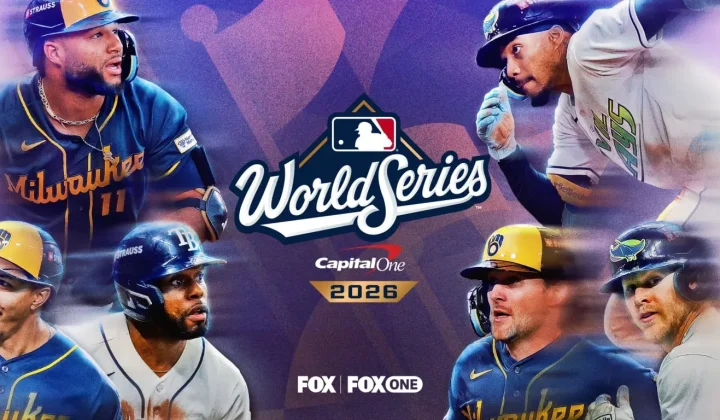
World Series 2026: Brewers and Rays bring elite speed to Fall Classic
Milwaukee and Tampa Bay ranked among MLB’s top five in stolen bases during the regular season and have continued running in October.…
Read storyRelated wiki

MLB Wild Card Rules Explained: Format, Tiebreakers & Postseason Impact
How the MLB wild card works in the current postseason format, including tiebreaker procedures, the 3-game series structure, and what it means…
Read storyPlayoff race
Reference page for playoff race language, qualification lines, tiebreakers and games-in-hand context.
Read story