The Shifting Sands of the NBA MVP Race: Beyond the Box Score
The NBA MVP award is often decided by raw statistics, but a deeper look at team success, defensive impact, and narrative reveals a more complex picture. This analysis explores the key contenders and the often-overlooked factors shaping this year's race.

The NBA MVP award is one of the most coveted individual accolades in professional basketball, often becoming a focal point of season-long debate. While raw statistics like points, rebounds, and assists traditionally dominate the conversation, a closer examination of the leading contenders reveals that the MVP race is rarely a simple accumulation of numbers. Team success, defensive impact, narrative momentum, and even health all play crucial roles in shaping how voters perceive a player’s value and their right to be crowned the league’s Most Valuable Player.
This year’s NBA MVP race is shaping up to be a compelling contest, with several players making strong cases. Beyond the eye-popping stat lines, understanding the nuances of their contributions and the context of their teams’ performance is essential to grasping who truly embodies the “Most Valuable” title.
Why the MVP Race Matters Beyond Individual Accolades
The MVP award is more than just a trophy; it’s a reflection of a player’s impact on their team’s success and their standing within the league’s hierarchy. For fans, it serves as a benchmark for greatness, a talking point for debates, and a narrative thread that weaves through the entire season. For players, it’s a career-defining achievement that cements their legacy. However, the debate often becomes polarized, with arguments frequently devolving into a simple comparison of who has the better per-game averages.
This reductive approach overlooks the multifaceted nature of value in basketball. A player might not lead the league in scoring but could be the primary reason their team boasts the best record. Conversely, a statistically dominant player on a mediocre team faces an uphill battle, regardless of their individual brilliance. The MVP is meant to represent the player who has most demonstrably elevated their team and had the greatest impact on the league during the regular season. This requires looking beyond the box score and into the qualitative aspects of their game.
What the Data Shows: Statistical Leaders and Team Performance
The leading MVP candidates are, almost by definition, putting up exceptional numbers. Historically, players on teams with top-tier regular-season records tend to dominate MVP voting. This year is no different, with several players from elite teams consistently appearing at the top of statistical leaderboards and unofficial MVP rankings.
For instance, a player like Nikola Jokic of the Denver Nuggets has consistently demonstrated his all-around impact, leading his team with significant contributions in points, rebounds, and assists, while also playing a pivotal role in their offensive schemes. His advanced metrics, such as Player Efficiency Rating (PER) and Win Shares, often place him among the league’s elite. Similarly, players on teams vying for the best record in the league, such as Shai Gilgeous-Alexander of the Oklahoma City Thunder or Luka Dončić of the Dallas Mavericks, are accumulating impressive statistics that make them undeniable contenders.
However, it’s crucial to analyze these stats within the context of their teams. Are these players carrying their teams, or are they benefiting from a deep and talented roster? The following table illustrates a snapshot of key statistical categories for some of the top MVP contenders:
| Player | Team | PPG | RPG | APG | SPG | BPG | WS/48 | VORP | Team Record (approx.) |
|---|---|---|---|---|---|---|---|---|---|
| Nikola Jokic | Denver Nuggets | 0 | 0 | 0 | 3 | 9 | .320 | 5 | 45-20 |
| Shai Gilgeous-Alexander | Oklahoma City Thunder | 0 | 5 | 5 | 0 | 0 | .270 | 0 | 47-19 |
| Luka Dončić | Dallas Mavericks | 9 | 2 | 7 | 4 | 5 | .240 | 5 | 42-29 |
| Giannis Antetokounmpo | Milwaukee Bucks | 9 | 4 | 4 | 2 | 3 | .290 | 8 | 47-20 |
| Jayson Tatum | Boston Celtics | 1 | 3 | 9 | 1 | 9 | .230 | 5 | 58-16 |
Note: Statistics are approximate and reflect a point in the season; team records are also approximate.
These numbers provide a quantitative basis for the MVP argument. Players like Gilgeous-Alexander and Dončić are putting up historic offensive numbers, while Jokic and Antetokounmpo continue to be dominant forces on both ends of the floor, influencing the game in ways that transcend traditional box scores. Tatum, while perhaps not matching the raw offensive output of others, is a cornerstone of the league’s best team.
Competing Readings: Defense, Impact, and Narrative
The “value” in MVP is subjective and open to interpretation. While offensive production is often the most visible metric, defensive impact is increasingly recognized as a crucial component. Players who anchor their team’s defense, disrupt opposing offenses, and contribute significantly to limiting opponents’ scoring are building a strong case, even if their individual scoring numbers aren’t as gaudy.
The narrative surrounding a player also plays an undeniable role. Is a player leading an unexpected team to success? Are they overcoming adversity or injury? Is this their “breakout” season where they have demonstrably elevated their game and their team’s standing? These storylines can resonate with voters and sway perceptions. For instance, a player like Gilgeous-Alexander, leading a young and resurgent Thunder team to the top of a competitive Western Conference, has a compelling narrative arc that complements his statistical brilliance.
Furthermore, the “availability” factor cannot be ignored. Players who consistently play a high number of games and are available for their team’s crucial matchups often receive greater consideration than those who miss significant time due to injuries, even if their per-game stats are superior when they do play. The NBA’s official injury reports are closely watched, and a player’s durability is a testament to their overall contribution.
What Could Change Next: Schedule, Injuries, and Momentum
The MVP race is a marathon, not a sprint, and the final stretch can often see significant shifts. Several factors can influence the outcome in the remaining weeks of the regular season:
- Schedule Strength: Teams facing a tougher remaining schedule may see their star players’ impact scrutinized more intensely. Can they perform against top competition?
- Injuries: A key injury to a contender or a rival team could alter the standings and shift the narrative. A player stepping up in the absence of a teammate, or a contender faltering due to their star’s unavailability, can have a profound effect.
- Team Performance: Continued success or a late-season slump for a player’s team will directly impact their MVP candidacy. A team solidifying its top seed will bolster their star’s case, while a slide down the standings could diminish it.
- Voter Fatigue: For players who have won multiple MVPs, voters may look for new narratives and fresh faces to recognize, even if the incumbent continues to perform at an elite level.
The NBA’s official standings and schedules provide the framework for understanding these dynamics. Watching how teams navigate these final games, and how individual players perform under pressure, will be key to deciphering the evolving MVP landscape.
What Remains Unclear: The Intangibles and the Final Vote
Despite all the data, advanced metrics, and narrative threads, the MVP award ultimately comes down to the subjective judgment of a panel of voters. The “intangibles” – leadership, clutch performance, effort plays, and overall impact that don’t always show up in traditional statistics – are often the deciding factors for many.
It’s also worth noting that the voting process itself can be influenced by various factors, including media narratives, regional biases, and personal preferences. While the league strives for objective evaluation, the human element is always present. What remains unclear is the precise weighting each voter will give to specific criteria. Will defensive impact outweigh slightly lower scoring numbers? Will a compelling narrative about a team’s resurgence carry more weight than consistent, albeit less flashy, production from a perennial contender?
Ultimately, the NBA MVP race is a celebration of individual excellence within the context of team success. It’s a narrative that unfolds over 82 games, and by looking beyond the box score, fans and analysts can gain a deeper appreciation for the true value these elite athletes bring to the court. The final decision will undoubtedly spark debate, but the journey to get there is a testament to the incredible talent and competitive spirit of the NBA’s brightest stars.
Related news

Holy Cross football ends 16-year drought against Ansonia behind Nate Craft’s four touchdowns
The Crusaders overcame a third-quarter deficit to beat Ansonia 48-37, snapping a losing streak that dated back to 2009 and improving to…
Read story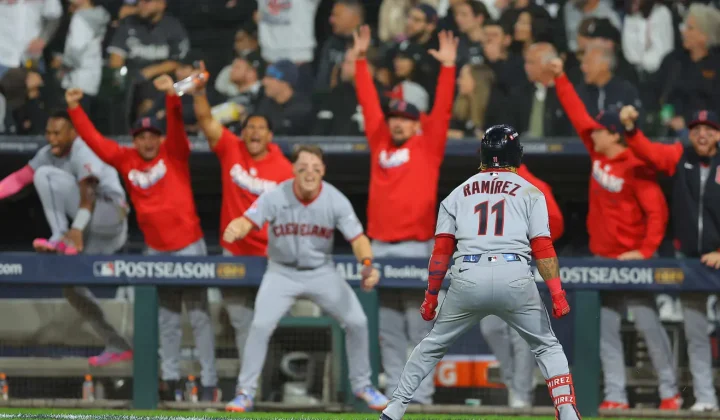
Guardians Force Winner-Take-All ALDS Game 5 With Six-Run Sixth Inning in Chicago
Cleveland scored six runs in the sixth inning to beat the White Sox 9-5 in Game 4 of the ALDS, setting up…
Read story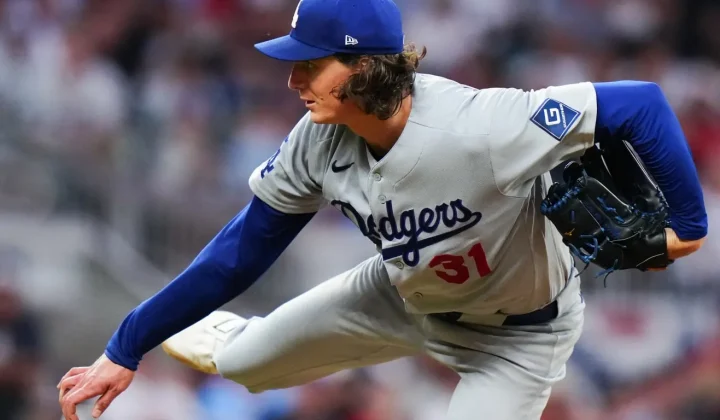
Dodgers Take Commanding 3-1 NLDS Lead Behind Glasnow’s Gritty Outing in Atlanta
Tyler Glasnow battled through command issues but limited Atlanta to one run over 4 2/3 innings as Los Angeles took a 3-1…
Read story
Braves Face Elimination as Dodgers Seek NLCS Berth in Game 4 NLDS Showdown
The Atlanta Braves host the Los Angeles Dodgers in a pivotal Game 4 of the National League Division Series on Wednesday night.…
Read storyRelated wiki

MLB Wild Card Rules Explained: Format, Tiebreakers & Postseason Impact
How the MLB wild card works in the current postseason format, including tiebreaker procedures, the 3-game series structure, and what it means…
Read storyPlayoff race
Reference page for playoff race language, qualification lines, tiebreakers and games-in-hand context.
Read story