How Player Movement Drives NBA Team Success: Trades, Free Agency, and the Draft
Explore how trades, free agency, and the NBA draft fundamentally shape team performance, with data-driven insights and strategic considerations for evaluating roster changes.
The National Basketball Association (NBA) is a league defined by constant evolution. Player movement, whether through trades, the allure of free agency, or the strategic anticipation of the draft, serves as the primary catalyst for team success and the dynamic shifting of the league’s competitive balance. For enthusiasts and analysts alike, understanding the intricate ways these roster transformations influence on-court performance is paramount.
The Strategic Art of Trades
Trades represent the most immediate and often the most dramatic form of player movement. A well-executed trade can swiftly transform a struggling franchise into a legitimate contender, while a poorly conceived deal can hinder a team’s progress for multiple seasons. Beyond the initial assessment of talent acquisition or loss, the true impact of a trade is revealed through its long-term ramifications. Key considerations include how seamlessly new players integrate into the existing team chemistry, their adaptability to different coaching philosophies and schemes, and their ability to embrace a new team culture and environment.
Consider the potential statistical shifts from a hypothetical trade:
| Metric | Team A (Pre-Trade) | Team B (Pre-Trade) | Team A (Post-Trade) | Team B (Post-Trade) |
|---|---|---|---|---|
| Points Per Game | 110 | 105 | 115 | 100 |
| Rebounds Per Game | 42 | 40 | 45 | 38 |
| Assists Per Game | 25 | 23 | 27 | 21 |
| Defensive Rating | 110 | 108 | 107 | 112 |
This simplified illustration suggests Team A might enhance its offensive output and defensive efficiency, while Team B experiences a significant alteration in its statistical profile. However, these numbers alone cannot capture the intangible elements of team cohesion, role acceptance, and overall synergy.
Free Agency: Building Through Player Choice
Free agency provides players with the autonomy to switch teams independently of a trade, frequently resulting in substantial roster overhauls. Teams possessing considerable salary cap flexibility are often in a prime position to attract top-tier talent, thereby reshaping their competitive trajectory. Conversely, franchises with limited financial maneuverability may only be able to make minor roster adjustments or face the challenging prospect of losing pivotal players. The success of free agency acquisitions is contingent upon a team’s capacity to effectively integrate new personalities and playing styles, alongside the player’s willingness to accept a defined role within the team’s established structure.
The Draft: Cultivating Future Foundations
The NBA Draft serves as the primary mechanism for teams to acquire emerging, developing talent. While its impact may not be as immediate as trades or free agency, the draft’s long-term significance is undeniable. A strong draft class can produce cornerstone players who anchor a franchise for a decade or more, significantly extending its competitive window. Conversely, missed draft selections can leave a team devoid of the foundational pieces necessary for sustained contention. Evaluating draft success requires patience, as the full potential of draftees often takes several seasons to fully materialize.
Analyzing Long-Term Performance Trends
To truly comprehend the multifaceted impact of player movement, a longitudinal analysis is essential. Tracking key team performance metrics across multiple seasons, while meticulously accounting for significant roster changes, offers a more holistic understanding. Several crucial factors warrant close examination to assess the true value of player movement:
Assessing Team Chemistry and Cohesion
Investigating how effectively new players integrate with existing teammates is vital. Does the team’s on-court communication, mutual understanding, and overall synergy improve or suffer following roster changes? Evaluating this often requires qualitative observation beyond raw statistics.
Evaluating Scheme Fit and Adaptability
Do the acquired players’ skill sets align harmoniously with the team’s established offensive and defensive schemes? Furthermore, can the coaching staff adeptly integrate new personnel into the team’s system and make necessary strategic adjustments to maximize their contributions?
Monitoring Player Development Trajectories
For draft picks and younger players acquired via trades, observing their progression and development within the new team environment is crucial. This includes tracking improvements in their individual statistics, understanding of team concepts, and overall basketball IQ.
Ultimately, player movement within the NBA functions as a complex, interconnected ecosystem. While statistical analysis provides invaluable insights into performance shifts, it is the dynamic interplay of talent, strategic planning, and the inherent human element that truly dictates a team’s ultimate success. Diligent observation of these transitions and their consequent impacts adds a compelling layer to the ongoing narrative of each NBA season. For fans and analysts seeking to deepen their understanding, tracking these roster moves and their observable effects on team play offers a rewarding avenue for engagement.
Related news
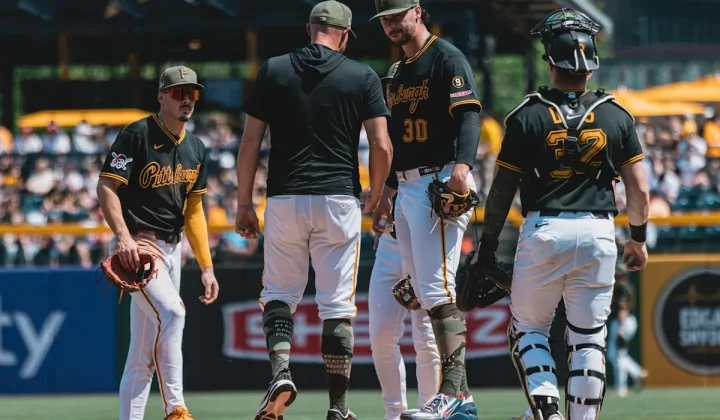
Pirates Eliminated From Playoff Contention Despite Offensive Surge in 2026
The Pittsburgh Pirates have been mathematically eliminated from the MLB postseason for the 11th consecutive year. Despite a vastly improved offense that…
Read story
Jamie Carragher’s High Praise Puts Daniel Munoz in Rare Premier League Company
The Nottingham Forest and Colombia defender received a remarkable endorsement from the Sky Sports pundit after his performance against Aston Villa, sparking…
Read story
Sandy Alcantara Records First Career Save in Marlins Bullpen Appearance
Miami ace Sandy Alcantara earned his first career save Wednesday night, working a scoreless ninth inning in a 4-3 win over the…
Read story
Broncos Defense Faces Another Test as Jaguars Visit Denver in Week 2
After allowing 220 rushing yards and 31 points to Kansas City in Week 1, Denver’s defense now must contain Trevor Lawrence and…
Read storyRelated wiki

MLB Wild Card Rules Explained: Format, Tiebreakers & Postseason Impact
How the MLB wild card works in the current postseason format, including tiebreaker procedures, the 3-game series structure, and what it means…
Read storyPlayoff race
Reference page for playoff race language, qualification lines, tiebreakers and games-in-hand context.
Read story