The Evolving Landscape of Sports Media Consumption: Data, Trends, and the Future
An in-depth analysis of how technological advancements and shifting audience behaviors are reshaping sports media, drawing on recent data and expert insights to forecast future developments.

The way fans consume sports content has undergone a seismic shift, driven by technological innovation and evolving audience preferences. What was once a straightforward affair of tuning into a live broadcast has fragmented into a complex ecosystem of linear television, streaming services, social media, and interactive digital platforms. This evolution is not merely a change in delivery method; it fundamentally alters how sports are experienced, marketed, and understood. Understanding these shifts is crucial for media organizations, sponsors, and fans alike as we look towards the future of sports engagement.
This column will delve into the key trends shaping the sports media landscape, examining the data that underpins these changes, exploring the implications for various stakeholders, and considering what the future may hold. We will look at how multi-platform strategies are maximizing reach, the growing momentum of sports like soccer, and the increasing importance of data in understanding and engaging audiences.
Why it Matters
The transformation of sports media consumption carries significant weight across multiple dimensions. For broadcasters and rights holders, it directly impacts revenue streams, advertising effectiveness, and the ability to reach and retain younger demographics. The fragmentation of audiences necessitates more sophisticated strategies to capture attention and viewership. For brands and sponsors, it means rethinking advertising placements and engagement tactics to align with where fans are actually watching and interacting with sports content. Moreover, for fans, these changes offer unprecedented access and choice, but also present challenges in navigating the ever-expanding media universe. The insights gleaned from this evolving landscape can also inform athlete development and team management, as data analytics increasingly informs on-field decisions.
What Sources Show
Recent reports highlight several dominant trends. Nielsen’s “Tops of Sports” report for 2025, for instance, points to the significant opportunity in multi-platform success, where linear and streaming platforms attract complementary audiences. The successful integration of free streaming services like Tubi for the Super Bowl and Peacock for Sunday Night Football demonstrates how airing games across both formats maximizes impact and reach by capturing different, yet valuable, viewer segments. This strategy is not unique to American football; similar patterns are observed in other sports, indicating a broader shift towards hybrid viewing models.
The report also underscores the continued momentum of soccer, which remains the most popular sport globally, with 51% of the world identifying as fans. While American engagement is lower at 27%, viewing of international soccer tournaments in the U.S. has seen substantial growth. The average audience for Copa América doubled compared to 2021, and both the UEFA Women’s Euro and CONCACAF Gold Cup experienced significant increases in viewership. This suggests a growing appetite for the sport in the U.S., potentially driven by increased accessibility and the global nature of the sport.
Furthermore, Nielsen data indicates that the MLB Postseason is boosting diverse baseball viewership. This suggests that major events can indeed drive engagement and attract new audiences, even in established sports.
Beyond viewership numbers, technological advancements are also reshaping how athletes perform and how their performance is analyzed. Catapult’s insights on 2025 Sports Trends emphasize the integration of technology, from wearable devices to advanced analytics, as a key factor in competitive advantage. Wearable technology, such as GPS-tracking vests, provides detailed performance data, enabling personalized training and injury prevention strategies. The application of Artificial Intelligence (AI) and data analytics is revolutionizing training development and injury prevention by offering personalized insights into athlete performance and revealing patterns through advanced algorithms. This fusion of sports and technology is not just about enhancing performance but also about creating new narratives and content for media consumption.
Competing Readings
While the data points towards clear trends, there are nuances and competing interpretations. The success of multi-platform strategies, for example, is not solely about broadcasting on multiple channels but about *how* those channels are integrated and targeted. A poorly executed multi-platform approach could lead to audience confusion and dilution rather than synergy. The growth in soccer viewership, while significant, still faces the challenge of translating that international appeal into consistent, year-round domestic league engagement comparable to established American sports.
The increasing reliance on data analytics also raises questions about potential over-reliance and the “human element” in sports. While data can optimize performance, sports are inherently unpredictable and often driven by moments of individual brilliance and emotional narrative. The danger lies in a purely data-driven approach that might stifle creativity or overlook intangible factors that contribute to a sport’s appeal. As noted in “Sport, journalism and social reproduction,” the media discourse often centers on athletes as individual stars, a narrative that can be amplified or distorted by data.
Moreover, the rise of streaming and digital platforms, while offering choice, also presents a challenge for traditional sports journalism. The context provided by in-depth analysis and editorial commentary, as discussed in “Sports press: an explanatory and identity scheme,” is vital for enriching the reader’s experience. The challenge is to integrate this analytical depth into formats that are palatable for digital consumption, without falling into the trap of superficial reporting. The trend towards individualization in media coverage, where athletes are presented as personalities akin to politicians, can also overshadow the sporting narratives themselves.
What Could Change Next
The trajectory suggests a continued push towards hyper-personalization of content. AI and machine learning will likely play an even larger role in tailoring sports viewing experiences, from personalized highlight reels to customized in-game statistics and commentary. We can expect to see more innovative integrations of augmented reality (AR) and virtual reality (VR) in broadcasting, offering immersive experiences that go beyond passive viewing.
The “creator economy” is also set to influence sports media. Athletes, teams, and even fan communities will leverage social media and direct-to-consumer platforms to build their own media empires, bypassing traditional gatekeepers. This could lead to more authentic, unfiltered content, but also a greater need for media literacy among consumers to discern credible information.
The analysis of sports media, as explored in academic literature, often focuses on the role of journalists in shaping narratives. As the media landscape diversifies, the lines between traditional journalism, content creation, and fan-generated content will continue to blur. This could lead to new forms of sports commentary and analysis that are more interactive and participatory than ever before.
What Remains Unclear
Despite the clear trends, several aspects remain uncertain. The long-term sustainability of the current media rights model in the face of increasing fragmentation and the rising costs of content acquisition is a significant question. How will leagues and broadcasters adapt if younger demographics continue to favor on-demand and social media consumption over live, linear broadcasts?
The ethical implications of pervasive data collection and AI in sports are also an area that requires ongoing scrutiny. While beneficial for performance, the potential for misuse of personal data or algorithmic bias in talent identification and performance analysis needs careful consideration.
Finally, the impact of global events and economic shifts on sports media consumption remains a wildcard. Unexpected geopolitical events, economic downturns, or unforeseen technological disruptions could all alter the current trajectory in ways that are difficult to predict.
The sports media landscape is in a constant state of flux, driven by innovation and shifting consumer habits. The data overwhelmingly points to a future where multi-platform access, technological integration, and personalized experiences are paramount. However, the enduring power of compelling narratives and expert analysis will likely ensure that traditional forms of sports journalism and commentary continue to evolve, rather than disappear, in this dynamic environment.
| Trend | Description | Key Impact |
|---|---|---|
| Multi-Platform Success | Broadcasting across linear TV and streaming services simultaneously. | Maximizes reach, captures diverse audience segments. |
| Soccer Momentum | Growing global and U.S. viewership for international soccer tournaments. | Increased fan base and commercial opportunities. |
| Data & AI Integration | Use of wearables, analytics, and AI for performance optimization. | Enhanced athlete training, injury prevention, new insights. |
| Creator Economy Influence | Athletes/teams leveraging direct-to-consumer platforms for content. | More authentic content, potential disruption of traditional media. |
| Immersive Technologies | AR/VR integration in broadcasting for enhanced fan experience. | Deeper engagement, novel viewing possibilities. |
Related news

Pirates Eliminated From Playoff Contention Despite Offensive Surge in 2026
The Pittsburgh Pirates have been mathematically eliminated from the MLB postseason for the 11th consecutive year. Despite a vastly improved offense that…
Read story
Jamie Carragher’s High Praise Puts Daniel Munoz in Rare Premier League Company
The Nottingham Forest and Colombia defender received a remarkable endorsement from the Sky Sports pundit after his performance against Aston Villa, sparking…
Read story
Sandy Alcantara Records First Career Save in Marlins Bullpen Appearance
Miami ace Sandy Alcantara earned his first career save Wednesday night, working a scoreless ninth inning in a 4-3 win over the…
Read story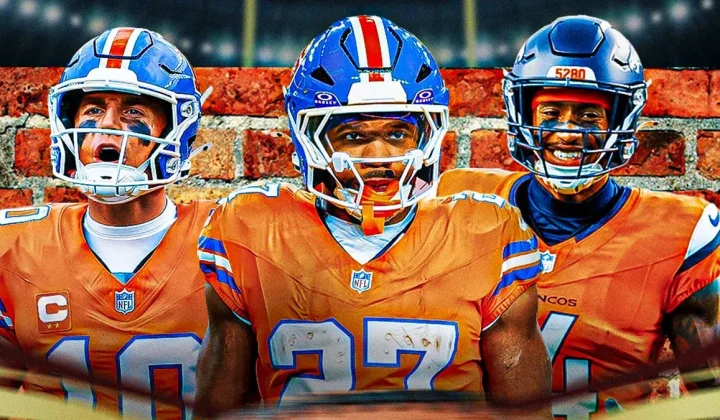
Broncos Defense Faces Another Test as Jaguars Visit Denver in Week 2
After allowing 220 rushing yards and 31 points to Kansas City in Week 1, Denver’s defense now must contain Trevor Lawrence and…
Read storyRelated wiki

MLB Wild Card Rules Explained: Format, Tiebreakers & Postseason Impact
How the MLB wild card works in the current postseason format, including tiebreaker procedures, the 3-game series structure, and what it means…
Read storyPlayoff race
Reference page for playoff race language, qualification lines, tiebreakers and games-in-hand context.
Read story