How the AL Wild Card Race Is Being Reshaped by September Schedules and Injury Returns
With less than 30 games left, the AL Wild Card picture is tightening. A look at the schedule gaps, injury returns and roster decisions that will decide which teams play in October.


The American League Wild Card race entering September is as congested as any in recent memory. With fewer than 30 regular-season games remaining for most clubs, the margin between a home playoff game and an early offseason is measured in single games. The Boston Red Sox, Minnesota Twins, Kansas City Royals, Seattle Mariners and Detroit Tigers are all within striking distance of the two available spots, and the next three weeks will separate the teams that can manage their pitching, absorb injury returns and exploit schedule soft spots from those that cannot.
This is not a story about who has the best roster on paper. It is a story about who has the most favorable path through the final stretch, who is getting key players back at the right time and who is running out of runway with too many tough opponents left on the board.
Why the Wild Card Race Is Still Wide Open
The Baltimore Orioles and Cleveland Guardians have largely separated themselves as division winners in the AL East and AL Central, respectively. But the second and third Wild Card spots remain unsettled. According to the official MLB standings as of August 31, the Red Sox and Twins are tied for the two Wild Card positions, with the Royals one game back, the Mariners two games back and the Tigers three games back.
What makes this race different from earlier in the summer is the schedule compression. Every series now carries outsized weight. A sweep or a sweep loss can swing a team’s playoff probability by more than five percentage points. The teams that can win series against losing clubs and avoid getting swept by contenders will have the edge, because there is no longer time to recover from a bad week.
What the Remaining Schedules Show
The schedule disparity among the contenders is significant. Using official MLB schedule data, here is how the remaining opponents break down for each Wild Card hopeful:
| Team | Games Left | Home Games | vs. Teams Over .500 | vs. Teams Under .500 |
|---|---|---|---|---|
| Boston Red Sox | 28 | 13 | 16 | 12 |
| Minnesota Twins | 28 | 14 | 10 | 18 |
| Kansas City Royals | 27 | 12 | 11 | 16 |
| Seattle Mariners | 28 | 16 | 12 | 16 |
| Detroit Tigers | 27 | 13 | 14 | 13 |
The Twins have the most favorable remaining schedule by opponent winning percentage, with 18 games against clubs currently below .500. That includes series against the Los Angeles Angels, Chicago White Sox and Miami Marlins. The Red Sox face the toughest road, with 16 games against teams over .500, including seven against the New York Yankees and three against the Orioles.
Seattle plays 16 of its final 28 games at home, which could help a pitching staff that has carried the team all season. But the Mariners offense has been the league’s worst in terms of batting average since the All-Star break, and home field has not solved that problem yet.
Injury Returns That Could Shift the Balance
The other variable that separates these teams is health. Several contenders are expecting key players back from injury in early September, and how quickly those players regain form could determine whether a team surges or stalls.
The Red Sox are the most impacted by injury uncertainty. Shortstop Trevor Story has been out since April with a shoulder injury, and his return timeline remains unclear. Without him, Boston has relied on Ceddanne Rafaela and David Hamilton, who have provided speed but inconsistent defense and on-base production. The Red Sox are also waiting on right-hander Garrett Whitlock, who has been rehabbing from elbow surgery. If Whitlock can give them quality innings down the stretch, it would stabilize a rotation that has leaned too heavily on Brayan Bello and Kutter Crawford.
The Twins recently activated Byron Buxton from the injured list after he missed time with a hip issue. Buxton’s presence in center field and at the plate changes Minnesota’s ceiling. In the 12 games before his injury, he was hitting .310 with three home runs. If he stays healthy, the Twins lineup becomes much harder to navigate for opposing pitchers.
The Royals have been relatively healthy but are monitoring the workload of rookie starter Cole Ragans, who has already thrown more innings than in any previous professional season. Kansas City has been careful with his pitch counts, but September fatigue is a real concern for a rotation that lacks depth behind Ragans and Brady Singer.
Seattle’s offense has been the biggest question mark, and the return of shortstop J.P. Crawford from a hand fracture on August 30 provides a small lift. Crawford is not a power hitter, but his on-base skills and defensive reliability are things the Mariners have missed. The bigger issue is whether Julio Rodríguez can carry the lineup through a tough stretch of games against the Texas Rangers and Houston Astros.
Competing Readings of the Same Data
Not everyone agrees on which team has the best path. Some analysts point to the Royals as the most dangerous team because of their balance: they rank in the top half of the league in both runs scored and runs allowed, and they have a closer in James McArthur who has converted 18 of 21 save opportunities. Others argue that the Twins are the team to beat because of their schedule and their experience in close games down the stretch last season.
The Mariners remain a polarizing case. Their pitching, led by Luis Castillo and George Kirby, is good enough to carry them into the postseason. But the offense has been historically bad in high-leverage situations. According to team splits data, Seattle is hitting .211 with runners in scoring position since July 1. That is not a small-sample fluke; it is a systemic problem that the return of one player is unlikely to fix.
Detroit is the long shot, but the Tigers have been the hottest team in the group over the past two weeks, winning eight of their last ten. Their pitching staff has a 3.12 ERA in that stretch, and rookie Colt Keith has provided a spark in the middle of the lineup. The question is whether they can sustain that level against a schedule that includes the Red Sox and Twins directly.
What Could Change Next
The most important factor over the next ten days is the head-to-head matchups among the contenders. The Red Sox and Twins play a three-game series in Minneapolis starting September 6. The Royals and Twins meet for four games in Kansas City beginning September 9. Those series will effectively eliminate one team from the race or create separation that is difficult to overcome with only two weeks left.
The schedule also includes several series against teams that are already eliminated or playing for draft position. The Twins face the White Sox six times in September. The Royals get the Pirates and Nationals. The Mariners draw the Athletics and Padres. Winning those series is not optional; it is required.
What Remains Unclear
Several questions do not have clear answers yet. The Red Sox bullpen has been overworked and has a 4.67 ERA in August, which is the worst among the five contenders. Boston’s front office did not add a high-leverage reliever at the trade deadline, and that decision could cost them in close games.
The Mariners have not announced whether they will skip any starts for Kirby or Castillo to manage innings, but both pitchers are on pace to exceed their career highs. If either falters, Seattle has no reliable alternative.
The Royals have the smallest margin for error because they play only 27 games and have the least experienced roster in the group. Their young hitters, including Bobby Witt Jr. and Vinnie Pasquantino, have carried the offense all year, but September pressure is different from August pressure.
Practical Checks for the Coming Week
For readers tracking this race, the most useful next steps are simple. Check the official injury reports before each series to see who is activated or placed on the IL. Watch the Red Sox-Twins series starting September 6 as a potential elimination game. And monitor the Mariners lineup against left-handed pitching, because Seattle faces four lefty starters in the next ten days and their splits against left-handers are the worst in the AL.
The AL Wild Card race will not be decided by hype or history. It will be decided by which team executes in the smallest moments: a two-out hit, a clean inning from a middle reliever, a catch in the gap. Those moments are coming fast now, and the teams that handle them best will play in October.
Related news
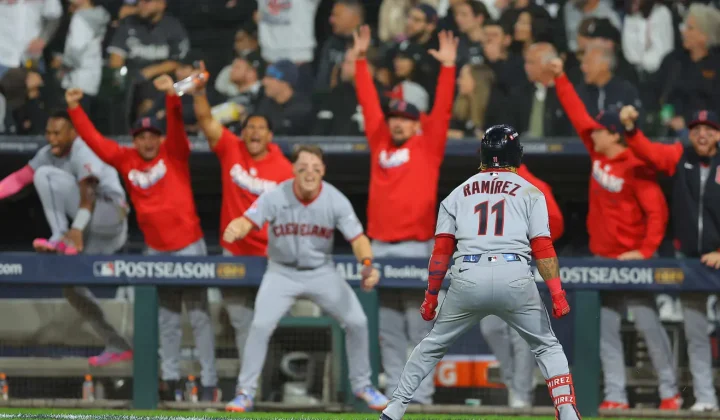
Guardians Force Winner-Take-All ALDS Game 5 With Six-Run Sixth Inning in Chicago
Cleveland scored six runs in the sixth inning to beat the White Sox 9-5 in Game 4 of the ALDS, setting up…
Read story
Dodgers Take Commanding 3-1 NLDS Lead Behind Glasnow’s Gritty Outing in Atlanta
Tyler Glasnow battled through command issues but limited Atlanta to one run over 4 2/3 innings as Los Angeles took a 3-1…
Read story
Braves Face Elimination as Dodgers Seek NLCS Berth in Game 4 NLDS Showdown
The Atlanta Braves host the Los Angeles Dodgers in a pivotal Game 4 of the National League Division Series on Wednesday night.…
Read story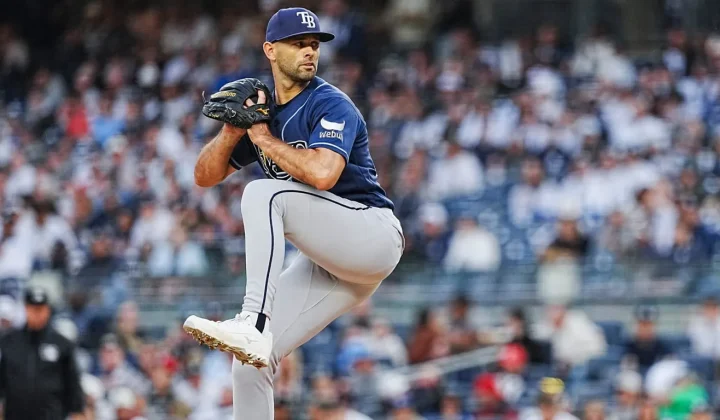
Nick Martinez Returns to Yankee Stadium as Rays Seek ALDS Sweep in Game 3
Tampa Bay right-hander Nick Martinez, who once got ejected from Yankee Stadium as a college fan, starts ALDS Game 3 against New…
Read storyRelated wiki

MLB Wild Card Rules Explained: Format, Tiebreakers & Postseason Impact
How the MLB wild card works in the current postseason format, including tiebreaker procedures, the 3-game series structure, and what it means…
Read storyPlayoff race
Reference page for playoff race language, qualification lines, tiebreakers and games-in-hand context.
Read story