The Evolution of Baseball: From Rounders to the Modern Game
Explore the fascinating history of baseball, tracing its roots from early bat-and-ball games to the professional sport we know today, highlighting key rule changes and cultural impacts.

Baseball, often called America’s Pastime, boasts a history as rich and complex as the game itself. Its journey from simple bat-and-ball games played in fields to the highly structured professional sport of today is a captivating narrative of evolution, innovation, and cultural significance. Understanding the evolution of baseball provides insight not only into the sport but also into American society and its development.
The Ancient Roots and Early Bat-and-Ball Games
The origins of baseball are not a single, definitive event but rather a gradual development from older bat-and-ball games that have been played across various cultures for centuries. Many historians point to games like Rounders, a popular English pastime, as a significant ancestor. Rounders, documented as early as the 17th century, involved hitting a ball and running between bases, bearing a striking resemblance to early forms of baseball. Other European games such as stoolball and cricket also share common lineage, demonstrating a widespread human inclination towards games involving bats, balls, and bases.
In the early 19th century, variations of these games were played on both sides of the Atlantic. In the United States, these games were known by various names, including “town ball,” “base,” “goal ball,” and “baseball.” Rules were largely unwritten and varied significantly from town to town, often dictated by local custom and the number of players available. These informal games laid the groundwork for the more organized sport that would emerge.
Codifying the Rules: The Knickerbocker Influence
One of the most crucial steps in baseball’s evolution was the codification of its rules. While informal games had existed for decades, the need for standardized rules became apparent as the sport grew in popularity and inter-club play became more common. In 1845, Alexander Cartwright and the Knickerbocker Base Ball Club of New York are widely credited with establishing a set of rules that significantly shaped the modern game. These rules, often referred to as the “Knickerbocker Rules,” were revolutionary for their time.
Key innovations included:
* Foul lines: Defining the playing area, rather than allowing hits in any direction.
* Three outs per inning: A fundamental concept that structured gameplay.
* Force outs: Requiring a runner to be tagged or the base touched before they arrived.
* Diamond-shaped infield: Standardizing the layout of the bases.
* Pitching from a designated area: Though not yet a mound, it began to formalize the pitcher’s role.
The first official game played under these rules took place in Hoboken, New Jersey, on June 19, 1846, between the Knickerbockers and the New York Nine. Although the Knickerbockers lost, this game marked a pivotal moment in the evolution of baseball, setting a precedent for organized play.
The Rise of Professionalism and Major Leagues
The mid-19th century saw baseball transition from an amateur pursuit to a professional endeavor. The allure of competition and the growing number of spectators led to teams seeking out the best players, sometimes offering compensation under the table. The Cincinnati Red Stockings, formed in 1869, were the first openly all-professional team. Their undefeated season and barnstorming tour across the country captivated audiences and demonstrated the viability of professional baseball as a commercial enterprise.
This success sparked a rapid expansion of professional clubs and ultimately led to the formation of organized leagues. The National League of Professional Base Ball Clubs was founded in 1876, becoming the first major professional sports league in the world to successfully complete a season. It quickly established itself as the premier league. Rival leagues emerged, most notably the American League in 1901. After years of intense competition, the two leagues eventually found a way to coexist, leading to the first World Series in 1903 and ultimately merging to form Major League Baseball (MLB) as we know it today.
Significant Milestones in Baseball’s Evolution
The game has undergone continuous refinement since its professionalization. Many rule changes and innovations have been introduced to improve fairness, player safety, and the overall spectator experience.
- 1858: Called strikes and balls | Introduced more structure to the pitcher-batter duel.
- 1879: Overhand pitching allowed | Increased velocity and offensive challenge.
- 1893: Pitcher’s mound established | Standardized pitching distance and elevated the pitcher.
- 1920: Live-ball era begins | Increased scoring and home runs, changing strategy.
- 1947: Jackie Robinson breaks color barrier | Integrated the sport, bringing new talent and cultural impact.
- 1973: Designated Hitter (DH) adopted (AL) | Changed offensive strategy, particularly in the American League.
Cultural Impact and Modern Adaptations
Beyond the diamond, baseball has woven itself deeply into the fabric of American culture. It has served as a mirror reflecting societal changes, from the struggles for racial integration epitomized by Jackie Robinson breaking the color barrier in 1947, to its role as a unifying force during times of war and national crisis. The sport has produced countless iconic figures—from Babe Ruth to Jackie Robinson, Willie Mays to Derek Jeter—and countless memorable moments that transcend the game itself, becoming part of national folklore and shared cultural heritage. Its themes of teamwork, perseverance, individual brilliance, and the pursuit of excellence resonate deeply with fans across generations.
The Modern Game and Future Directions
Today, baseball continues its fascinating evolution. Advanced analytics, often referred to as sabermetrics, have revolutionized how teams evaluate players, develop strategies, and manage games. New training methodologies, nutritional science, and sports medicine are pushing the boundaries of athletic performance. Equipment continues to evolve, from lighter, stronger bats to more protective gear.
While the core elements of nine innings, three outs, and hitting a ball remain, the sport is constantly adapting to the modern era. Efforts are made to engage new generations of fans through faster play, enhanced digital experiences, and global outreach, all while honoring its storied past and rich traditions. The journey from simple games in dusty fields to the globally recognized, multi-billion-dollar sport it is today is a testament to baseball’s enduring appeal and its remarkable capacity for change and adaptation. The evolution of baseball is a continuing story, ensuring its place as a beloved pastime for years to come.
Related news

For Former Rays Across MLB, Watching Tampa Bay Make It to the World Series Means a Little Extra
From Blake Butera to a sprawling network of ex-Tampa Bay executives and coaches, the Rays’ run to the 2026 World Series stirs…
Read story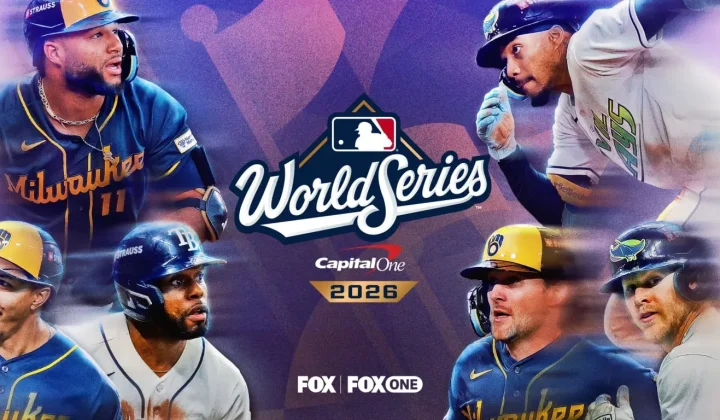
World Series 2026: Brewers and Rays bring elite speed to Fall Classic
Milwaukee and Tampa Bay ranked among MLB’s top five in stolen bases during the regular season and have continued running in October.…
Read story
Intentional Talk Canceled: What MLB Network’s Programming Cuts Mean for the Future of the Channel
After 16 seasons, MLB Network has canceled Intentional Talk, its flagship talk show. The move is the latest in a series of…
Read story
Rays Closer Bryan Baker Reflects on ‘Blur’ of Final Strike That Sent Tampa Bay to World Series
Tampa Bay closer Bryan Baker described the final strike to clinch the American League pennant as a blur, telling Sportsnet’s Arden Zwelling…
Read storyRelated wiki

MLB Wild Card Rules Explained: Format, Tiebreakers & Postseason Impact
How the MLB wild card works in the current postseason format, including tiebreaker procedures, the 3-game series structure, and what it means…
Read storyPlayoff race
Reference page for playoff race language, qualification lines, tiebreakers and games-in-hand context.
Read story