The Evolving Landscape of Sports Analytics: More Than Just Numbers
Modern sports analytics have moved beyond simple statistics to fundamentally change how games are played, managed, and understood, offering deeper insights and fostering a data-driven culture.


The world of sports is undergoing a profound transformation, fueled by the rapid advancement and integration of analytics. What was once a realm dominated by raw talent and instinct is increasingly becoming a domain where data reigns supreme. This shift is not merely about crunching numbers; it represents a fundamental redefinition of how games are played, managed, understood, and even consumed by fans. Modern sports analytics have evolved far beyond basic statistics, ushering in an era where data-driven insights are paramount for performance optimization, strategic decision-making, and a deeper appreciation of athletic endeavors.
Why This Matters in Modern Sports
The integration of sophisticated analytics into sports is no longer a niche pursuit but a core component of competitive success and fan engagement. Teams and athletes who embrace these tools gain a significant edge, optimizing training regimens, refining game strategies, and even predicting opponent tendencies. For fans, analytics offer a richer understanding of the game, moving beyond the surface-level action to appreciate the intricate details of player performance and tactical execution. This data-driven approach fosters a more informed and engaged audience, deepening their connection to the sports they love. As highlighted by uww-eu.org, analytics are revolutionizing sports at every level, from grassroots development to elite competition, creating a community centered on informed decision-making.
What the Sources Show
The evolution of sports analytics is characterized by several key trends, each contributing to a more data-intensive sporting landscape.
Data-Driven Performance Optimization: This is perhaps the most impactful trend. By analyzing vast datasets encompassing player statistics, biomechanics, and even physiological responses, teams can tailor training programs to maximize individual and collective potential. This approach ensures that training is not just about effort but about smart, strategic development aligned with specific goals. As noted by uww-eu.org, this trend allows for “tailor[ed] training sessions and strategies that align with both individual and team goals.”
Player Tracking Technology: Advanced player tracking systems provide real-time, granular data on player movement, positioning, speed, and distance covered. This technology offers unprecedented insights into player efficiency, tactical positioning, and work rate. For example, understanding how a basketball player moves off the ball or how a soccer midfielder covers ground can lead to significant strategic adjustments. uww-eu.org emphasizes that player tracking offers “a real-time understanding of player movement and positioning.”
Predictive Modeling: Leveraging historical data and real-time inputs, predictive models aim to forecast player performance, game outcomes, and potential injury risks. While not infallible, these models assist coaches and analysts in making proactive decisions, anticipating trends rather than merely reacting to them. This foresight can be crucial in both game planning and long-term roster management. The uww-eu.org article points out that predictive modeling allows us to “forecast player performance and potential outcomes,” moving from reaction to anticipation.
These advancements are not isolated but work in concert. Player tracking data feeds into performance optimization models, and the insights gained from both can inform predictive analytics. This interconnectedness creates a powerful ecosystem of data that informs virtually every aspect of modern sports.
Competing Readings and Interpretations
While the benefits of sports analytics are widely acknowledged, there are different perspectives on their ultimate impact and the extent of their influence.
The “Analytics Revolution” Narrative: One dominant narrative is that analytics represent a true revolution, fundamentally changing the game and rendering traditional scouting and intuition obsolete. Proponents of this view see data as the ultimate arbiter of talent and strategy, capable of uncovering hidden inefficiencies and optimizing performance to an unprecedented degree.
The “Augmented Intelligence” Perspective: A more nuanced view suggests that analytics are a powerful tool to augment, rather than replace, human expertise. In this reading, data provides valuable insights, but it is the experienced coach, scout, or analyst who interprets this data within the broader context of the sport, player psychology, and team dynamics. This perspective acknowledges that while data can inform decisions, it doesn’t negate the need for human judgment and intuition. The Frontiers in Sociology article touches on how media coverage individualizes athletes, similar to politicians, creating “star images” and emotional connections, suggesting that while data is important, the human element and narrative also play a crucial role in sports perception.
Concerns about Over-reliance and Data Bias: Some critics worry about an over-reliance on analytics, leading to a homogenization of playing styles or a de-emphasis on creativity and flair. There’s also the potential for data bias, where the metrics collected may not capture all aspects of a player’s contribution or could inadvertently penalize certain playstyles. Ensuring that the data collected is comprehensive and that the interpretation is balanced is crucial to avoid these pitfalls.
The Role of Media and Fan Engagement: Nielsen’s “Tops of Sports” report highlights how analytics are also shaping the media landscape. Trends like multi-platform programming, the rise of women’s sports, and the growing audience for soccer are all informed by data analysis. This suggests that analytics are not just for teams and athletes but also for broadcasters and marketers seeking to understand and engage diverse audiences. Nielsen’s findings underscore how data informs strategies for media planning and marketing in sports.
What Could Change Next
The trajectory of sports analytics suggests continued innovation and deeper integration into the fabric of sports.
More Sophisticated Predictive Models: Expect predictive models to become even more nuanced, incorporating a wider array of variables and potentially offering real-time strategic recommendations during games. This could lead to more dynamic in-game adjustments and a greater emphasis on adaptability.
AI and Machine Learning: The application of artificial intelligence and machine learning will likely accelerate, enabling more complex pattern recognition, automated scouting, and personalized training protocols. AI could also be used to analyze opponent tendencies with greater speed and accuracy.
Enhanced Fan Experience: Analytics will likely play a larger role in enhancing the fan experience, from personalized content delivery to more interactive broadcast elements. Data visualizations and real-time insights delivered to viewers could deepen engagement and understanding. Nielsen’s report on multi-platform success, for example, shows how data informs how different audiences consume sports, leading to strategies that maximize reach across linear and streaming platforms.
Integration with Wearable Technology: The proliferation of wearable devices for athletes will generate even more physiological and biomechanical data, providing a continuous stream of information for performance analysis and health monitoring.
What Remains Unclear
Despite the rapid progress, several aspects of sports analytics remain subjects of ongoing development and debate.
The True Impact on Competitive Balance: While analytics can help individual teams optimize, it’s unclear whether they will ultimately lead to greater competitive balance across leagues. Teams with greater financial resources may be able to invest more heavily in analytics, potentially widening the gap with less affluent clubs.
The Ethical Implications of Data Collection: As more data is collected on athletes, questions about privacy, ownership, and the ethical use of this information will become increasingly important. The line between performance enhancement and intrusive surveillance can be thin.
The Balance Between Data and Human Element: The extent to which “gut feeling” and intangible human factors will continue to play a role in sports remains to be seen. While data can illuminate many aspects of performance, the psychological and emotional elements of competition are harder to quantify.
The following table summarizes some of the key trends in modern sports analytics:
| Trend | Description | Impact |
|---|---|---|
| Performance Optimization | Using data to tailor training and strategies for individual and team goals. | Maximizes potential, informed decision-making, smarter play. |
| Player Tracking | Real-time data on player movement, positioning, and biometrics. | Deepens understanding of performance, tactical analysis, efficiency assessment. |
| Predictive Modeling | Forecasting player performance, game outcomes, and potential risks using historical and real-time data. | Proactive decision-making, strategic anticipation, risk management. |
| Data-Informed Media Strategy | Analyzing viewership and engagement to optimize broadcast and marketing efforts. | Increased reach, targeted content, enhanced fan experience across platforms. |
In conclusion, sports analytics have moved far beyond a supplementary tool to become an indispensable force shaping the modern sporting world. From the training field to the broadcast booth, data is unlocking new levels of understanding, performance, and engagement. While challenges and questions remain, the trend is unequivocally towards a more data-driven future for sports, offering a richer, more informed experience for all involved.
Related news

Guardians Force Winner-Take-All ALDS Game 5 With Six-Run Sixth Inning in Chicago
Cleveland scored six runs in the sixth inning to beat the White Sox 9-5 in Game 4 of the ALDS, setting up…
Read story
Dodgers Take Commanding 3-1 NLDS Lead Behind Glasnow’s Gritty Outing in Atlanta
Tyler Glasnow battled through command issues but limited Atlanta to one run over 4 2/3 innings as Los Angeles took a 3-1…
Read story
Braves Face Elimination as Dodgers Seek NLCS Berth in Game 4 NLDS Showdown
The Atlanta Braves host the Los Angeles Dodgers in a pivotal Game 4 of the National League Division Series on Wednesday night.…
Read story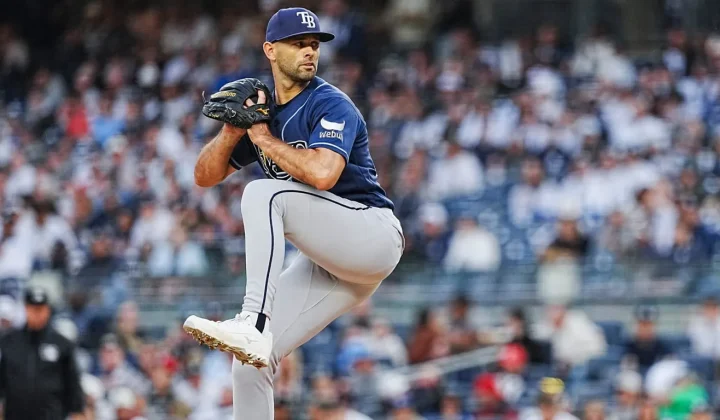
Nick Martinez Returns to Yankee Stadium as Rays Seek ALDS Sweep in Game 3
Tampa Bay right-hander Nick Martinez, who once got ejected from Yankee Stadium as a college fan, starts ALDS Game 3 against New…
Read storyRelated wiki

MLB Wild Card Rules Explained: Format, Tiebreakers & Postseason Impact
How the MLB wild card works in the current postseason format, including tiebreaker procedures, the 3-game series structure, and what it means…
Read storyPlayoff race
Reference page for playoff race language, qualification lines, tiebreakers and games-in-hand context.
Read story