How NFL Playoff Seeding Works: A Complete Guide to the 2025 Format
Understand the NFL playoff seeding rules, division winners vs. wild cards, tiebreakers, and how the bracket is set for the 2025 postseason.


Every January, the NFL playoffs bring together 14 teams—seven from the AFC and seven from the NFC—to compete for a Super Bowl berth. But how exactly are those teams seeded, and what happens when two teams finish with identical records? The NFL playoff seeding system has specific rules that determine who gets a first-round bye, who plays at home, and who has to win on the road. This guide explains the current 14-team playoff format, the seeding criteria, tiebreakers, and what fans should watch for as the 2025 postseason approaches. It also includes a practical checklist to help you track the race week by week.
The 14-Team Playoff Format
The NFL expanded from 12 to 14 teams in the 2020 season. Each conference sends seven teams: four division winners (from the AFC East, North, South, and West; same for the NFC) and three wild card teams (the best non-division-winning records in each conference). Seeds 1 through 4 automatically go to the division winners, ordered by win-loss record. Seeds 5, 6, and 7 are the wild cards, also ordered by record. The No. 1 seed in each conference gets a first-round bye and does not play in Wild Card Weekend. Seeds 2 through 7 play in the first round.
Super Wild Card Weekend features three games per conference on Saturday, Sunday, and Monday. The No. 2 seed hosts the No. 7 seed, No. 3 hosts No. 6, and No. 4 hosts No. 5. The lowest remaining seed then travels to the No. 1 seed in the Divisional Round, while the other two winners play each other based on bracket positioning.
How Seeding Is Determined
Seeding order is based on win-loss-tie percentage within the regular season. The NFL uses a structured tiebreaking system when two or more teams have the same record.
Division Winners (Seeds 1–4)
Within a division, the team with the best record wins the division and secures a top-four seed. If two teams in the same division tie, the first tiebreaker is head-to-head record. If three or more teams tie, the NFL applies a specific multi-team tiebreaker procedure (see table below).
Wild Card Teams (Seeds 5–7)
Wild cards are selected from the remaining non-division-winning teams across the conference, regardless of division. The three best records earn the wild card spots, again using tiebreakers if necessary.
NFL Tiebreaking Procedures
The NFL tiebreaker system is applied in a specific order. Here are the key steps for two tied teams within the same division:
Step | Tiebreaker Criterion
— | —
1 | Head-to-head record (if both teams played each other)
2 | Best won-lost-tied percentage in division games
3 | Best won-lost-tied percentage in common games (minimum four)
4 | Best won-lost-tied percentage in conference games
5 | Strength of victory (combined winning percentage of teams beaten)
6 | Strength of schedule (combined winning percentage of all opponents)
7 | Net points in conference games
8 | Net points in all games
9 | Coin toss
For wild card ties between teams from different divisions, the first step is head-to-head if they played. If not, the league moves to conference record, then common games (if applicable), then strength of victory, and so on. The NFL’s official tiebreaking rules are published each year and can be found at NFL.com. The 2025 procedures will follow the same structure unless the league announces changes.
What the Bracket Looks Like After Wild Card Weekend
Once the Wild Card round ends, the bracket is reset for the Divisional Round: the No. 1 seed hosts the lowest remaining seed from its conference; the other two winners play each other, with the higher seed hosting. For example, if the No. 7 and No. 4 seeds win, the No. 1 seed hosts the No. 7 seed, and the No. 4 seed hosts the No. 2 or No. 3 seed (whichever advanced). The higher seed always hosts. The Conference Championship games are then hosted by the highest remaining seed. The Super Bowl site is pre-determined and neutral.
Key Changes for 2025
The NFL has not announced any major format changes for the 2025 playoffs as of early 2025. The 14-team bracket remains. However, the league reviews the overtime rule each offseason; as of 2024, both teams get a possession in playoffs unless the receiving team scores a touchdown on its first drive. Fans should check official NFL rule updates closer to the postseason. The most reliable source for any changes is the NFL Operations website.
Practical Next Checks
If you’re following the playoff race, here are reliable sources to track seeding: NFL.com official standings and tiebreaker scenarios; team websites for injury reports that affect tiebreaker strength-of-schedule calculations; and ESPN or The Athletic for weekly playoff-picture analyses. No source can guarantee a team’s seeding before the final week—tiebreakers often depend on results from multiple games. The best approach is to monitor the official NFL standings page each Tuesday morning after Week 18.
To help you stay on top of the race, here is a checklist you can use each week from Week 10 onward:
Step | Action | Why It Matters
— | — | —
1 | Check each conference’s top 7 records (not just division leaders) | Wild card spots are filled by record, not division
2 | Note any head-to-head results between tied teams | This is the first tiebreaker after overall record
3 | Compare division records for teams in the same division | Second tiebreaker for division ties
4 | Track common games for teams from different divisions | Third tiebreaker for wild card ties
5 | Use a playoff predictor tool (e.g., NFL.com, ESPN) | Simulates tiebreaker scenarios based on remaining games
By following this checklist, you can predict seeding changes before the official release. Remember that strength of victory and strength of schedule can shift dramatically in the final weeks, so keep an eye on the win-loss records of each team’s opponents. The 2025 postseason promises to be as competitive as ever. With the 14-team format, the margin between a bye and a road wild card game is razor thin. Use this guide and the checklist above to stay informed and enjoy the race to the Super Bowl.
Related news
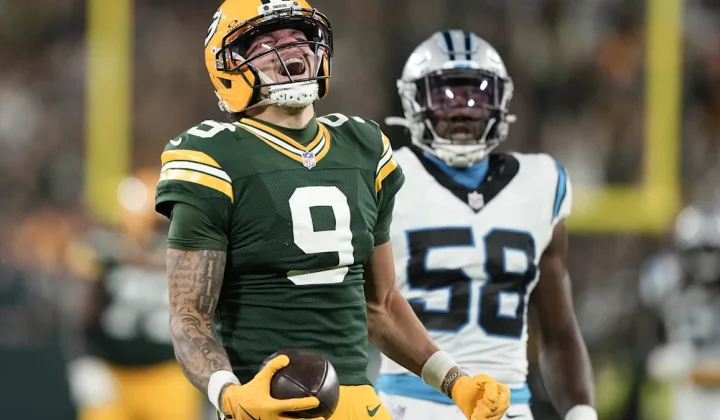
Packers’ Christian Watson Details Hospital Trip and Return After Rib Scare Against Panthers
Green Bay receiver Christian Watson explains why he left Lambeau Field by ambulance during Thursday’s win over Carolina, what the hospital evaluation…
Read story
Jurickson Profar Plays First Game Since 162-Game Suspension With Venezuelan Winter League Debut
The Braves outfielder went 2-for-4 in his Venezuelan winter league debut and addressed the club on camera for the first time, according…
Read story
Robert Gasser’s six scoreless innings put Brewers one win from World Series title
The rookie limited Tampa Bay to one hit over six innings as Milwaukee won Game 3, 10-1, and moved within one victory…
Read story
Week 7 Fantasy Football Takeaways: Garrett Wilson and Justin Jefferson Headline Top Receiver Woes
Michael Salfino breaks down the biggest fantasy football storylines from Week 7, including the continued struggles of star wide receivers Garrett Wilson…
Read storyRelated wiki

MLB Wild Card Rules Explained: Format, Tiebreakers & Postseason Impact
How the MLB wild card works in the current postseason format, including tiebreaker procedures, the 3-game series structure, and what it means…
Read storyPlayoff race
Reference page for playoff race language, qualification lines, tiebreakers and games-in-hand context.
Read story