Lewis Hamilton Questions Ferrari Simulator’s Value After Strong Canadian GP Performance
Lewis Hamilton achieved his best result for Ferrari at the Canadian Grand Prix, a performance that has led him to believe he might be more effective without the team's simulator.
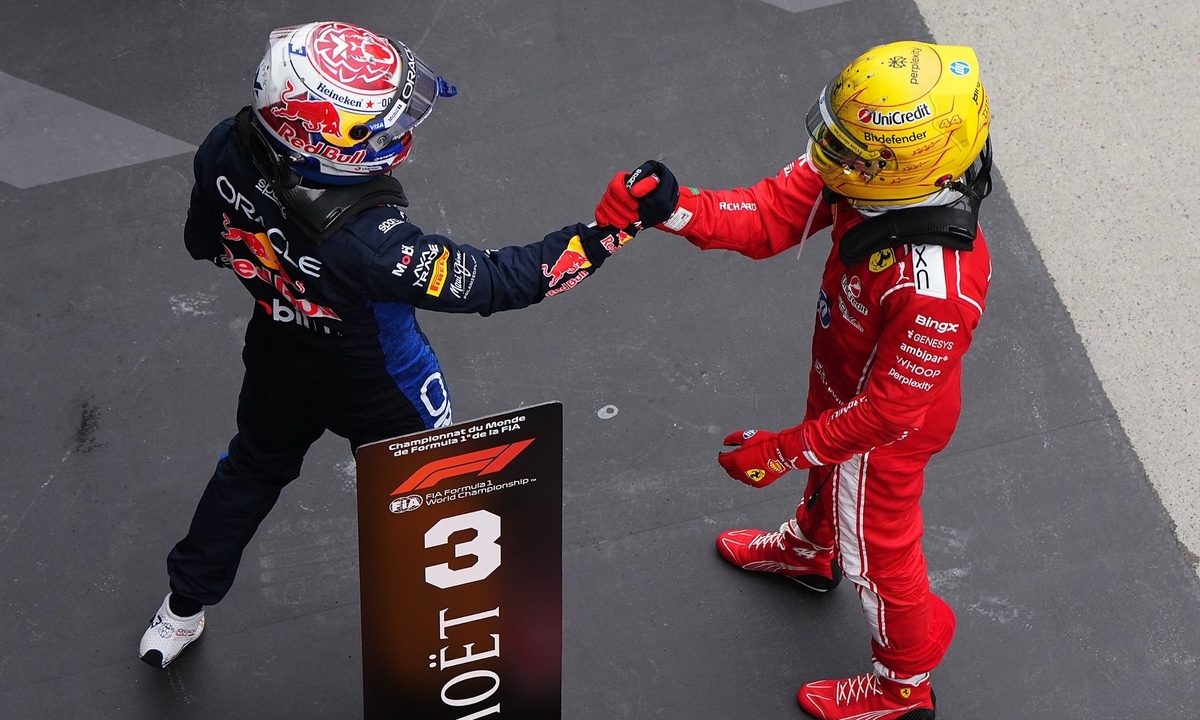
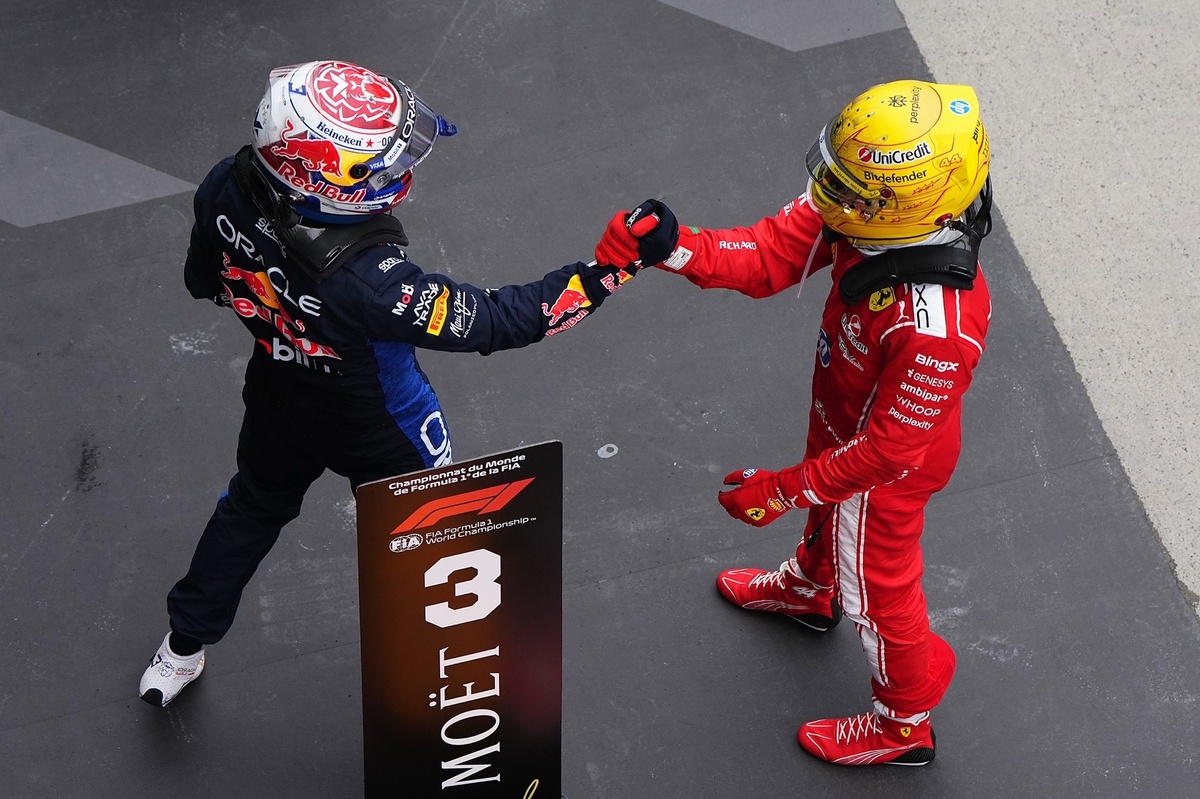
Lewis Hamilton has suggested that his best Grand Prix result for Ferrari, achieved at the recent Canadian Grand Prix, has prompted a re-evaluation of his relationship with the team’s simulator. The seven-time world champion, who secured a strong finish in Montreal, indicated that he might be performing at a higher level without the extensive simulator work he has undertaken since joining the Scuderia.
The Canadian Grand Prix weekend proved to be a significant event for Hamilton, as he notably outperformed his teammate Charles Leclerc for the majority of the event. This performance, which took place at the circuit where he claimed his maiden Formula 1 victory, has apparently provided him with a fresh perspective on his development and effectiveness within the Ferrari Formula 1 team.
A Turning Point in Montreal
Hamilton’s weekend in Montreal was marked by a resurgence in pace and a return to form that has been largely elusive during his tenure with Ferrari. Following a challenging 17 months with the Italian marque, the Canadian Grand Prix offered a compelling glimpse of the potential that has many anticipating his future performances.
Starting from fifth on the grid for the Grand Prix, Hamilton showcased impressive racecraft. Although he found himself behind Leclerc in the Sprint race, his performance in the main Grand Prix was particularly noteworthy. He successfully executed overtakes and secured his best-ever finish for Ferrari, a result that has clearly had a profound impact on his thinking.
Reassessing Simulator Dependency
The breakthrough performance in Canada has led Hamilton to reflect on his reliance on the Ferrari simulator. He expressed a sentiment that he is “probably better without” the simulator, implying that his on-track performance and intuitive feel for the car might be hindered rather than aided by extensive simulator sessions. This perspective challenges the conventional approach prevalent in modern Formula 1, where simulators are widely regarded as indispensable tools for driver development and car setup optimization.
Hamilton’s comments suggest a potential shift in his personal methodology for preparation. The simulator is engineered to replicate race conditions and enable drivers to test various car setups and gather data without the physical constraints of a race weekend. However, for Hamilton, the experience at the Canadian GP appears to have validated a more direct, on-track approach to honing his skills and understanding the car.
Exploring Alternative Preparation Methods
The traditional role of a Formula 1 simulator involves providing drivers with a controlled environment to analyze track data, refine driving techniques, and test aerodynamic upgrades. For many drivers, it is an essential part of their weekly routine, complementing physical training and engineering debriefs. Hamilton’s recent statements, however, hint at a possible disconnect between the simulated environment and his optimal performance on the actual race track.
This divergence in opinion could stem from various factors. Some drivers thrive on the data-driven feedback and repetitive practice offered by simulators, while others may find their natural racing instincts and feel for the car are best developed through real-world driving experience. Hamilton, a driver known for his exceptional feel for the machinery, might be one who benefits more from the organic process of on-track learning.
Implications for Ferrari’s Strategy
The evolving views of Hamilton regarding simulator use could carry significant implications for Ferrari. As the team continues its efforts to develop its car and refine its strategy for the remainder of the season, understanding how each driver best extracts performance will be paramount. Hamilton’s assertion that he might achieve better results without the simulator indicates a unique driver preference that Ferrari will need to carefully consider within its operational framework.
This development also occurs as Hamilton gears up for his highly anticipated move to Lewis Hamilton Racing in 2025. His current season with Ferrari is widely viewed as a transitional period, and any insights into his methods for optimizing performance are of considerable interest to both the team and the wider F1 community. The Canadian GP result and his subsequent reflections on simulator use provide valuable context for his remaining races with the Scuderia.
Looking Ahead
Hamilton’s renewed confidence and strong performance in Canada, coupled with his fresh perspective on simulator work, could signal a period of heightened determination for the remainder of the 2024 season. The focus will now shift to observing whether this newfound clarity translates into sustained performance improvements and if Ferrari adapts its approach to accommodate his evolving preferences. The ongoing narrative of Hamilton’s final season with Ferrari is expected to be closely scrutinized, with each upcoming race offering further insights into his approach and the team’s dynamics.
Key Facts
- Event: Canadian Grand Prix
- Driver: Lewis Hamilton
- Team: Ferrari
- Key Result: Best Grand Prix finish for Ferrari
- Driver Reflection: Potential for improved performance without simulator
- Source of Reflection: Post-Canadian GP comments reported by Autosport F1
The development holds significant importance for NationalSportsWeb readers as it offers a unique insight into the mindset and performance drivers of one of Formula 1’s most iconic athletes. Lewis Hamilton’s questioning of a fundamental tool in modern motorsport, prompted by a strong performance, presents a compelling narrative about individual adaptation and the relentless pursuit of peak performance. For fans of F1, Ferrari, and Hamilton himself, this story delves into the personal journey of a champion seeking to optimize his final races with a legendary team.
Source: Autosport F1 – https://www.autosport.com/f1/news/why-awesome-canadian-gp-has-convinced-lewis-hamilton-hes-probably-better-without-ferrari-simulator/10824112/?utm_source=RSS&utm_medium=referral&utm_campaign=RSS-F1&utm_term=News&utm_content=uk
Source
Autosport F1 Original publication: 2026-05-25T08:15:39+00:00
Related news

Mookie Betts Powers Dodgers Past Giants in Key Late-Season Win
Mookie Betts delivered a four-hit performance, including three doubles, as the Los Angeles Dodgers defeated the San Francisco Giants 10-4 on Saturday…
Read story
Pirates Eliminated From Playoff Contention Despite Offensive Surge in 2026
The Pittsburgh Pirates have been mathematically eliminated from the MLB postseason for the 11th consecutive year. Despite a vastly improved offense that…
Read story
Jamie Carragher’s High Praise Puts Daniel Munoz in Rare Premier League Company
The Nottingham Forest and Colombia defender received a remarkable endorsement from the Sky Sports pundit after his performance against Aston Villa, sparking…
Read story
Sandy Alcantara Records First Career Save in Marlins Bullpen Appearance
Miami ace Sandy Alcantara earned his first career save Wednesday night, working a scoreless ninth inning in a 4-3 win over the…
Read storyRelated wiki

MLB Wild Card Rules Explained: Format, Tiebreakers & Postseason Impact
How the MLB wild card works in the current postseason format, including tiebreaker procedures, the 3-game series structure, and what it means…
Read storyPlayoff race
Reference page for playoff race language, qualification lines, tiebreakers and games-in-hand context.
Read story