How Odds Movement Should and Should Not Change a Sports Prediction
Understanding how opening lines, market moves, and closing-line value influence sports predictions is crucial for US and global sports fans. This guide explains which factors genuinely impact predicted outcomes and which are often misunderstood myths.

For many US and global sports fans, the world of predictions often intersects with betting odds. Whether you’re a casual observer trying to gauge a game’s potential outcome or a dedicated analyst, understanding how odds move and what that movement signifies is a crucial, yet often misunderstood, aspect of sports forecasting. This guide will clarify the appropriate role of odds movement in shaping a sports prediction, debunk common myths, and highlight what truly drives market shifts.
The Initial Line: A Professional Opinion
Every major sporting event begins with an “opening line” or “opening odds.” These are not random numbers; they are meticulously crafted by professional oddsmakers who use sophisticated algorithms, statistical models, and deep knowledge of the sport, teams, and players involved. The opening line represents the oddsmakers’ best estimate of the true probability of each outcome, adjusted for their desired hold (the bookmaker’s profit margin).
Factors influencing an opening line include:
- Team Strength and Form: Recent performance, historical matchups, and overall roster talent.
- Player Availability: Key injuries, suspensions, or returns.
- Home-Field Advantage: The impact of playing at home for specific teams or venues.
- Motivational Factors: Playoff implications, rivalries, or end-of-season scenarios.
- Public Perception (to a degree): Oddsmakers may slightly shade lines to encourage balanced betting action, but the core foundation is their assessment of probabilities.
The opening line is effectively a professional prediction based on extensive data and expertise before public money significantly impacts the market.
Market Movement: What Drives the Shifts?
Once the opening line is released, the betting market opens, and the odds begin to move. This “market movement” is a dynamic process influenced by several factors, some legitimate and some often misunderstood.
Legitimate Drivers of Odds Movement
Confirmed Injury News or Player Availability Changes: This is perhaps the most significant and legitimate reason for a substantial odds shift. If a star quarterback is unexpectedly ruled out, or a key defender is confirmed to return from injury, the probability of the game’s outcome fundamentally changes. The market reacts swiftly to price in this new information.
2. Significant Roster Changes or Trades: For leagues like the NBA or NFL, a major trade can immediately alter team dynamics and future performance. The market will adjust odds for upcoming games and even season-long futures.
3. Weather Conditions: For outdoor sports like football or baseball, a sudden change in forecasted weather (e.g., heavy rain, high winds) can dramatically affect scoring potential and game flow, leading to odds adjustments.
4. Sharp Money (Professional Bettors): A small number of highly successful, professional bettors (“sharps”) often have access to superior information or models. When a large amount of money comes in from these respected sources on one side of a line, oddsmakers pay attention because it indicates a potential flaw in their initial assessment. They will adjust the line to mitigate their risk and balance their books.
5. New Information or Analysis: Occasionally, a credible news report or a respected analyst’s detailed breakdown might reveal a significant strategic advantage or disadvantage that was not initially factored into the opening line.
Misunderstood or Overstated Drivers of Odds Movement
“Public Money” Myths: A common misconception is that “public money” (the aggregate bets from recreational bettors) moves lines significantly or correctly. While a massive influx of public money on one side might force an oddsmaker to adjust a line to protect their book, this isn’t necessarily because the public is “right.” Often, the public gravitates towards popular teams or narratives, which can sometimes create value on the less popular side. Smart bettors often look for spots where public sentiment has overreacted and created an advantageous line.
2. “Guaranteed” Picks or “Locks”: Any claim of a “guaranteed win” or a “lock” is misleading. Sports outcomes are inherently uncertain. Odds reflect probabilities, not certainties. Market movement simply refines those probabilities as new information becomes available or as professional money enters the market.
Closing-Line Value (CLV)
A crucial concept for anyone integrating odds into their prediction strategy is “Closing-Line Value” (CLV). CLV refers to the difference between the odds you predicted an outcome at and the odds available just before the game starts (the closing line).
If you predicted a team to win at +150 odds, and the closing line for that team is +120, you achieved positive CLV. This indicates that your initial assessment was stronger than the market’s initial assessment, or you reacted faster to information than the broader market. Positive CLV is often seen as a sign of skill in sports prediction, as it suggests you are identifying value before the market corrects itself.
Conversely, if you predicted a team at +150 and the line closed at +180, you had negative CLV. This implies the market moved against your initial prediction, perhaps due to new information you missed or a misjudgment on your part.
Example of Odds Movement and CLV
Let’s consider a hypothetical NFL game:
| Team | Opening Moneyline | Closing Moneyline |
|---|---|---|
| Kansas City Chiefs | -180 | -220 |
| Las Vegas Raiders | +160 | +190 |
In this scenario, the Chiefs’ odds moved from -180 to -220, meaning the market now perceives them as more likely to win. The Raiders’ odds moved from +160 to +190, indicating they are seen as less likely to win.
Possible Reasons for this Movement
- Injury to a key Raiders player announced after the opening line.
- Strong “sharp money” on the Chiefs, indicating professional bettors believe the Chiefs were undervalued at -180.
- Confirmation of a Chiefs’ star player returning from a minor injury.
How Odds Movement Should Influence Your Prediction
As a Source of New Information: If a significant odds movement occurs, especially a sharp one, it should prompt you to investigate why. Check official injury reports, team news, credible sports media, and weather forecasts. If you find a legitimate reason (e.g., a confirmed injury to a starting quarterback), that new information should inform your prediction, potentially causing you to adjust your original forecast.
2. As a Validation or Contradiction of Your Assessment: If you’ve done your own research and formed a prediction, and the market moves in your favor (i.e., you get positive CLV), it can be a sign that your initial assessment was strong. If the market moves against your prediction, it’s a signal to re-evaluate your reasoning. Did you miss something? Is there information the market has priced in that you haven’t?
3. Context, Not a Guarantee: Crucially, odds are a reflection of perceived probabilities and market sentiment, not a guarantee of outcome. Even if a team’s odds shorten significantly, they can still lose. The market is efficient, but not infallible.
4. Avoid Chasing Lines: Don’t blindly follow every line movement. Reactive betting without understanding the underlying reasons is a path to poor predictions. Always seek the reason behind the movement.
Conclusion
Odds movement is a powerful contextual tool for sports prediction. It distills a vast amount of information, from expert analysis to real-time news, into a numeric representation of probability. However, its utility lies in understanding its drivers. Focus on confirmed news, player availability, and the influence of sharp money. Disregard myths about “public money” guarantees and never treat odds as definitive statements of fact. By critically analyzing why odds move, you can refine your own sports predictions, identify value, and gain a deeper, more informed perspective on the outcomes of your favorite leagues and tournaments.
Related news
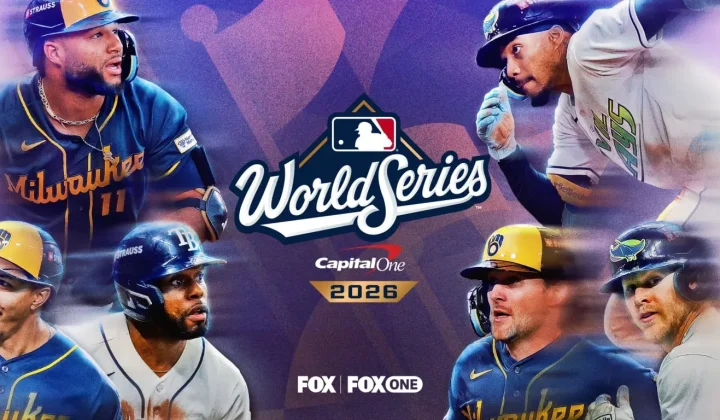
World Series 2026: Brewers and Rays bring elite speed to Fall Classic
Milwaukee and Tampa Bay ranked among MLB’s top five in stolen bases during the regular season and have continued running in October.…
Read story
Intentional Talk Canceled: What MLB Network’s Programming Cuts Mean for the Future of the Channel
After 16 seasons, MLB Network has canceled Intentional Talk, its flagship talk show. The move is the latest in a series of…
Read story
Rays Closer Bryan Baker Reflects on ‘Blur’ of Final Strike That Sent Tampa Bay to World Series
Tampa Bay closer Bryan Baker described the final strike to clinch the American League pennant as a blur, telling Sportsnet’s Arden Zwelling…
Read story
Marco Rose’s Bournemouth Finally Show Some Swagger. Now for the Game of a Lifetime
Bournemouth’s convincing win proves they are no relegation candidates. Next up: a historic home clash against European royalty AC Milan.
Read storyRelated wiki

MLB Wild Card Rules Explained: Format, Tiebreakers & Postseason Impact
How the MLB wild card works in the current postseason format, including tiebreaker procedures, the 3-game series structure, and what it means…
Read storyPlayoff race
Reference page for playoff race language, qualification lines, tiebreakers and games-in-hand context.
Read story