The NBA’s Intriguing Playoff Picture: Mid-Season Analysis of Contenders and Dark Horses
As the NBA season progresses, several teams are solidifying their playoff aspirations while others are emerging as potential dark horses. This analysis delves into the current standings, key matchups, and emerging trends shaping the league's postseason landscape.
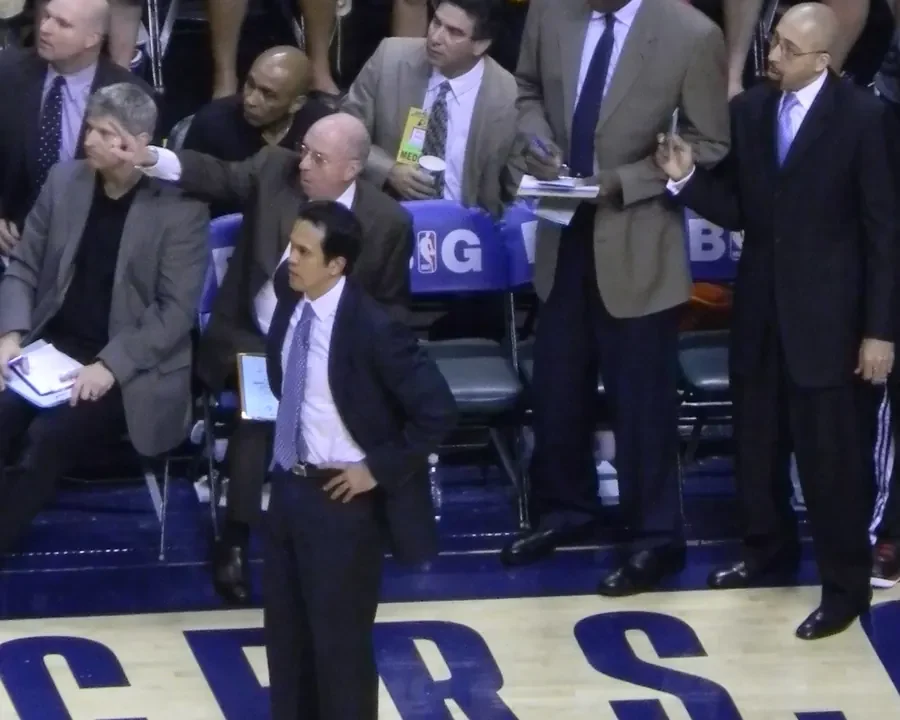
The NBA season is a marathon, not a sprint, and as we approach the midpoint of the 2023-2024 campaign, the playoff picture is beginning to sharpen into focus. While some perennial powerhouses are comfortably in stride, a fascinating mix of established contenders and emerging dark horses are battling for position, hinting at a potentially wide-open postseason. This analysis will delve into the current landscape, examining the key factors that are shaping which teams are poised for a deep playoff run and which may fall short.
Why This Analysis Matters Now
Understanding the current NBA playoff picture at this juncture of the season is crucial for several reasons. For fans, it provides a roadmap for the remainder of the regular season, highlighting compelling matchups and potential playoff previews. For fantasy basketball managers, it offers insights into team trajectories, potential player roles, and the implications of trades or injuries. For bettors and analysts, it serves as a foundation for evaluating team strengths, weaknesses, and their overall championship viability. The mid-season point is a critical juncture where teams have largely established their identity, but there is still enough time for significant shifts in momentum, player performance, and strategic adjustments.
What the Current Standings Show
A glance at the NBA standings reveals a familiar hierarchy at the top of both conferences, but with notable nuances. In the Eastern Conference, teams like the Boston Celtics and Philadelphia 76ers have often held dominant positions, showcasing strong offensive and defensive capabilities. However, the emergence of teams like the Milwaukee Bucks, with their offensive firepower, and the surprise consistency of the Orlando Magic, driven by a young core, adds layers of intrigue. The Western Conference often presents an even more crowded and competitive scenario. The Denver Nuggets, as reigning champions, remain a formidable force, but the Los Angeles Lakers and Golden State Warriors, despite their veteran status, are in a constant battle to secure playoff berths. Meanwhile, teams like the Minnesota Timberwolves and Oklahoma City Thunder have shown remarkable growth, establishing themselves as legitimate contenders.
Here’s a snapshot of how some of the top teams are performing, based on general trends observed mid-season:
| Team | Conference | Current Standing (Approx.) | Key Strengths | Key Weaknesses (Potential) |
|---|---|---|---|---|
| Boston Celtics | East | Top 2 | Elite offense, strong defense, depth | Occasional offensive droughts |
| Milwaukee Bucks | East | Top 4 | Superstar power, offensive versatility | Defensive consistency, coaching changes |
| Philadelphia 76ers | East | Top 4 | Star power, strong offense | Injury concerns, defensive lapses |
| Denver Nuggets | West | Top 3 | Championship experience, offensive cohesion | Bench depth, defensive lapses |
| Minnesota Timberwolves | West | Top 3 | Elite defense, balanced scoring | Offensive consistency, playoff experience |
| Oklahoma City Thunder | West | Top 4 | Young talent, dynamic playmaking, coaching | Inexperience, defensive lapses |
Note: Standings are approximate and subject to change based on the specific date of analysis.
Competing Readings on Playoff Potential
While the standings provide a quantitative overview, a qualitative analysis reveals different interpretations of playoff potential. Some might argue that teams with established championship pedigrees, like the Nuggets or perhaps a re-energized Warriors squad, possess an inherent advantage due to their postseason experience. They’ve navigated the pressure cooker of the playoffs before and know what it takes to win. Their veteran leadership and proven ability to elevate their game in crucial moments cannot be understated.
Conversely, the rise of younger, more dynamic teams like the Thunder or the burgeoning Magic presents a compelling counter-narrative. These teams often play with a fearless energy, unburdened by past playoff failures. Their athletic advantage and innovative offensive schemes can pose significant matchup problems for more experienced, but potentially slower, opponents. Their ability to dictate the pace and push the tempo could be a deciding factor in a long series. Furthermore, the impact of mid-season trades and player development cannot be overlooked. A key acquisition or a breakout performance from a young player can dramatically alter a team’s trajectory and playoff outlook.
What Could Change Next
The NBA season is fluid, and several factors can significantly alter the playoff landscape in the remaining months. Injuries are perhaps the most significant disruptor. A prolonged absence of a star player can derail even the most promising seasons, forcing teams to rely on their depth and adjust their strategies. Conversely, the return of key players from injury can provide a much-needed boost to a struggling team.
Player availability also plays a crucial role. Load management, minor nicks and bruises, and even personal reasons can lead to players missing games, affecting team chemistry and performance. A team that manages its players’ health effectively throughout the grueling season will likely be in a better position come playoff time.
Trades and buyouts are another significant element. Teams on the bubble may make aggressive moves to acquire talent and bolster their rosters for a playoff push, while contenders might seek to shore up specific weaknesses. The NBA trade deadline is always a period of intense speculation and potential team-altering transactions that can reshape the playoff seeding.
Finally, coaching adjustments and tactical shifts can have a profound impact. As teams learn more about their opponents and their own strengths and weaknesses, coaches will implement new strategies, refine offensive and defensive schemes, and adapt their rotations to maximize their chances of success. A well-timed tactical adjustment can be the difference between advancing and being eliminated.
What Remains Unclear
Despite the available data and analysis, several aspects of the NBA playoff picture remain uncertain. The true ceiling of some of the younger, less experienced teams is still an unknown quantity. Can the Thunder or Magic maintain their consistent performance against seasoned playoff teams under intense pressure? The impact of “clutch” performance in a playoff setting is notoriously difficult to predict. Will teams that have struggled in close games during the regular season suddenly find a way to win when it matters most?
Furthermore, the effectiveness of certain defensive schemes against elite offensive talent is always a question mark. Can teams with strong defensive metrics withstand the onslaught of a superstar-driven offense in a best-of-seven series? The psychological aspect of playoff basketball – the pressure, the stakes, the intense scrutiny – is also something that cannot be fully quantified. Some players and teams thrive under these conditions, while others falter.
Ultimately, the NBA playoff race is a compelling narrative that unfolds over 82 games and culminates in a high-stakes postseason. While current trends and analyses offer valuable insights, the beauty of the NBA lies in its inherent unpredictability. The teams that demonstrate resilience, adaptability, and a consistent will to win will be the ones who ultimately hoist the Larry O’Brien trophy. For now, the focus remains on the evolving dynamics, the emerging contenders, and the thrilling contests that will define the road to the NBA Finals.
Related news

Holy Cross football ends 16-year drought against Ansonia behind Nate Craft’s four touchdowns
The Crusaders overcame a third-quarter deficit to beat Ansonia 48-37, snapping a losing streak that dated back to 2009 and improving to…
Read story
Guardians Force Winner-Take-All ALDS Game 5 With Six-Run Sixth Inning in Chicago
Cleveland scored six runs in the sixth inning to beat the White Sox 9-5 in Game 4 of the ALDS, setting up…
Read story
Dodgers Take Commanding 3-1 NLDS Lead Behind Glasnow’s Gritty Outing in Atlanta
Tyler Glasnow battled through command issues but limited Atlanta to one run over 4 2/3 innings as Los Angeles took a 3-1…
Read story
Braves Face Elimination as Dodgers Seek NLCS Berth in Game 4 NLDS Showdown
The Atlanta Braves host the Los Angeles Dodgers in a pivotal Game 4 of the National League Division Series on Wednesday night.…
Read storyRelated wiki

MLB Wild Card Rules Explained: Format, Tiebreakers & Postseason Impact
How the MLB wild card works in the current postseason format, including tiebreaker procedures, the 3-game series structure, and what it means…
Read storyPlayoff race
Reference page for playoff race language, qualification lines, tiebreakers and games-in-hand context.
Read story