The NBA’s Tightest Playoff Races: Analyzing the Scramble for Seeding
The NBA regular season is nearing its conclusion, and several playoff races are tighter than ever. This analysis delves into the key matchups and differentials that will determine seeding in the Eastern and Western Conferences.


The NBA regular season always delivers drama as teams jockey for playoff positioning, but the current landscape presents a particularly compelling narrative of close races and intricate tie-breaker scenarios. As the final weeks unfold, the scramble for seeding in both the Eastern and Western Conferences is as intense as ever, with implications reaching far beyond simply making the postseason. The difference between a top-four seed and a play-in tournament spot can dramatically alter a team’s championship aspirations, making this period critical for every franchise.
This analysis will explore the key factors influencing these tight races, including head-to-head records, divisional advantages, conference tie-breakers, and the impact of recent performance. We will examine how these elements are shaping the playoff picture and what potential shifts could occur before the regular season concludes.
Why it Matters
The significance of playoff seeding in the NBA cannot be overstated. A top-six seed guarantees a spot in the main playoff bracket, avoiding the uncertainty of the play-in tournament. Furthermore, home-court advantage in the first round, and potentially subsequent rounds, is a substantial benefit, especially for teams with strong home records and passionate fan bases. For teams aiming for a deep playoff run, securing a higher seed can mean facing less formidable opponents in the early stages, thus conserving energy and reducing the risk of early elimination. The difference between the second and seventh seed in a conference can mean the difference between a perceived easier path to the Conference Finals or a grueling early-round matchup against a division rival or a perennial contender.
What Sources Show
Examining the current standings from official NBA sources provides a clear picture of the competitive battles. For instance, the race for the top seeds in the Eastern Conference often involves teams separated by only a few games. Factors like strength of schedule in the remaining games, crucial head-to-head matchups, and the health of key players become paramount.
A look at the Western Conference often reveals an even more compressed field. Teams vying for the 4th through 8th seeds can find themselves within a single game of each other, where a few consecutive wins or losses can dramatically alter their standing. Official NBA standings and team-specific schedule pages are essential for tracking these developments. For example, if Team A and Team B are tied in the standings, their head-to-head record becomes the first tie-breaker. If that’s also tied, conference record, divisional record, and then point differential come into play.
Here’s a snapshot of how a hypothetical tight race might look:
- 4: Team Phoenix | 45 | 30 | 28-20 | 8-4
- 5: Team Denver | 44 | 31 | 27-21 | 7-5
- 6: Team LA | 43 | 32 | 26-22 | 9-3
- 7: Team Dallas | 42 | 33 | 25-23 | 6-6
In this scenario, the Lakers (Team LA) hold the divisional advantage over Phoenix and Denver, which could be crucial if they finish with the same number of wins. Phoenix and Denver would then look to their conference records, and if those are also tied, other tie-breakers would be assessed.
Competing Readings
While the standings provide objective data, interpretations of what drives these positions can vary. Some analysts might emphasize a team’s recent form, arguing that a hot streak is more indicative of playoff potential than a team that has been consistently good but is now cooling off. Others might focus on the underlying metrics, such as offensive and defensive ratings, pointing to teams whose advanced stats suggest they are outperforming their win-loss record and are due for positive regression.
The impact of injuries is another significant variable. A team that has navigated the season relatively healthy might be viewed as having a more stable path, while a team that has overcome multiple key injuries might be seen as battle-tested and resilient, or conversely, as being on borrowed time if those injured players are not fully recovered. For example, if a team’s star player returns from a long-term injury just before the playoffs, it can drastically alter their perceived threat level. Examining official injury reports from league sources is vital to understanding these dynamics.
What Could Change Next
The remaining schedule plays a massive role in the fluidity of these races. Teams facing easier stretches of opponents might be expected to gain ground, while those with demanding schedules could see their standings slip. Furthermore, the NBA trade deadline, if it has recently passed, can lead to significant shifts in team composition and, consequently, their performance trajectory. A team that made a shrewd acquisition might surge, while a team that lost a key player might falter.
The psychological aspect of the playoff race also cannot be discounted. Teams that have historically struggled under pressure might begin to falter as the stakes heighten, while younger, emerging teams might play with a newfound confidence. The narrative surrounding these teams, often fueled by sports media outlets like ESPN or The Athletic, can influence public perception and even, some argue, team morale. However, it is crucial to ground these narratives in verifiable data.
What Remains Unclear
Despite the data, certainty in the NBA playoff race is elusive. The inherent unpredictability of basketball means that upsets and unexpected surges are always possible. Key matchups between direct rivals in the standings can swing momentum and create definitive separation, but these games are often close and can go either way.
The full impact of player health heading into the postseason remains a significant unknown. A minor injury to a star player in the final week of the season could have ripple effects throughout the playoff bracket. Similarly, the effectiveness of new offensive or defensive schemes implemented late in the season is difficult to predict. Ultimately, while we can analyze the trends and probabilities, the NBA playoffs are often decided by which teams perform best under pressure when it matters most. The path to the championship is rarely a straight line, and the current playoff races only underscore this enduring truth.
Related news
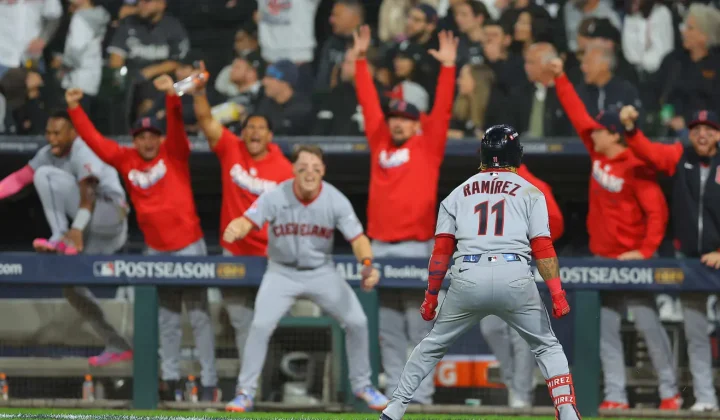
Guardians Force Winner-Take-All ALDS Game 5 With Six-Run Sixth Inning in Chicago
Cleveland scored six runs in the sixth inning to beat the White Sox 9-5 in Game 4 of the ALDS, setting up…
Read story
Dodgers Take Commanding 3-1 NLDS Lead Behind Glasnow’s Gritty Outing in Atlanta
Tyler Glasnow battled through command issues but limited Atlanta to one run over 4 2/3 innings as Los Angeles took a 3-1…
Read story
Braves Face Elimination as Dodgers Seek NLCS Berth in Game 4 NLDS Showdown
The Atlanta Braves host the Los Angeles Dodgers in a pivotal Game 4 of the National League Division Series on Wednesday night.…
Read story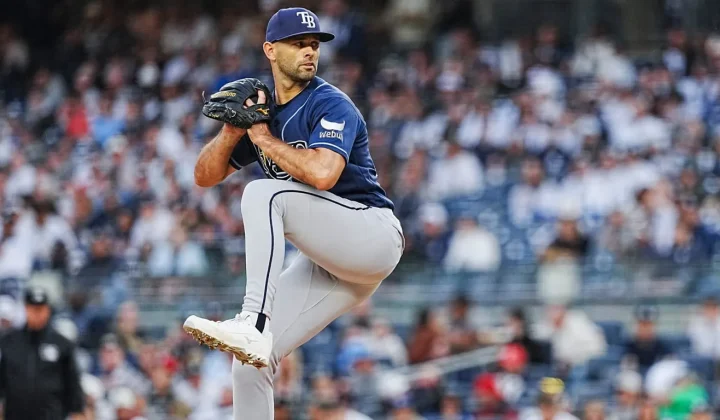
Nick Martinez Returns to Yankee Stadium as Rays Seek ALDS Sweep in Game 3
Tampa Bay right-hander Nick Martinez, who once got ejected from Yankee Stadium as a college fan, starts ALDS Game 3 against New…
Read storyRelated wiki

MLB Wild Card Rules Explained: Format, Tiebreakers & Postseason Impact
How the MLB wild card works in the current postseason format, including tiebreaker procedures, the 3-game series structure, and what it means…
Read storyPlayoff race
Reference page for playoff race language, qualification lines, tiebreakers and games-in-hand context.
Read story