The NBA’s Shifting Playoff Landscape: Are the Suns Built to Last?
An in-depth analysis of the Phoenix Suns' current standing, their potential playoff path, and the factors that will determine their success in the increasingly competitive NBA landscape.


The NBA’s playoff picture is a constantly evolving mosaic, with teams jockeying for position in the final weeks of the regular season. Among the contenders, the Phoenix Suns present a compelling case study in resilience and strategic maneuvering. Having navigated a season marked by significant roster adjustments and the integration of new star power, their current standing offers a glimpse into both their immediate potential and the long-term viability of their championship aspirations. This analysis delves into the Suns’ playoff trajectory, exploring the factors that will dictate their success and the broader implications for the Western Conference race.
The question on many minds is whether the Suns, with their current configuration, possess the sustained excellence required to not only make a deep playoff run but to ultimately contend for an NBA championship. Their season has been a testament to adaptation, particularly following the high-profile acquisition of Kevin Durant. While the addition of another perennial All-Star theoretically elevates any team’s ceiling, the practicalities of integrating such talent, managing personalities, and optimizing team chemistry are complex. The Suns have shown flashes of brilliance, but consistency and answering the bell against top-tier competition remain crucial benchmarks. Understanding their current position requires a deep dive into their recent performances, the impact of key players, and the strategic challenges they face.
Why This Matters Now
As the NBA regular season winds down, the stakes for every game escalate. For the Phoenix Suns, every win and loss directly influences their playoff seeding, which in turn shapes their potential matchups and the path to the NBA Finals. A higher seed could mean avoiding some of the conference’s toughest contenders until later rounds, or even securing home-court advantage, a significant factor in the postseason. Conversely, a slide in the standings could lead to a more arduous journey, potentially facing teams that have demonstrated a favorable matchup against them. Furthermore, the Suns’ performance in these crucial final games will serve as a critical indicator of their readiness for the high-pressure environment of the playoffs. It’s a period where teams solidify their identity, iron out kinks, and build momentum. For Phoenix, this period is about proving their championship mettle.
What Sources Show
Recent performance data highlights the Suns’ offensive firepower, often spearheaded by the trio of Kevin Durant, Devin Booker, and Bradley Beal. When healthy and in sync, this offensive unit is capable of overwhelming opponents. However, the team’s defensive consistency has been a point of scrutiny. Advanced metrics often reveal periods where their defensive intensity wanes, particularly against teams that excel at exploiting mismatches or running effective offensive sets.
Injury management has also been a recurring theme. The availability of all key players simultaneously has been sporadic, impacting their ability to establish consistent rotations and build seamless chemistry. Official injury reports and team statements provide crucial context here, underscoring the challenge of maintaining peak performance when key personnel are in and out of the lineup. For instance, a recent report from the team’s official site noted [mention a specific, hypothetical minor injury and its duration for context, e.g., “Bradley Beal’s absence for three games due to a hamstring strain”].
Looking at standings, the Suns are typically in contention for a top-four seed in the Western Conference, but their exact position fluctuates. A snapshot of the standings from a trusted sports data provider like ESPN or NBA.com typically shows them grouped with other strong Western Conference teams, indicating a tightly contested race. For example, as of a recent update, they might be positioned [mention a hypothetical seeding, e.g., “fourth in the Western Conference, just one game behind the third-place team”].
Competing Readings
One perspective is that the Suns, despite their ups and downs, are a legitimate championship contender due to the sheer individual brilliance of their star players. The argument here is that in the playoffs, talent often trumps all, and the ability of Durant and Booker to create their own shots and carry the offense in critical moments could be enough to overcome defensive lapses. This view emphasizes the high-level offensive execution they are capable of, which can be difficult for any defense to contain over a seven-game series.
Another reading suggests that the Suns’ reliance on their star power makes them vulnerable. Critics point to the team’s struggles when one of the primary scorers is having an off night or when facing defensive schemes specifically designed to neutralize their offensive flow. The argument is that without a more consistent team-wide defensive effort and a more balanced offensive attack that involves key role players more significantly, they might fall short against more cohesive and defensively stout opponents. The lack of consistent contributions from the supporting cast beyond the big three is often cited as a potential weakness. Furthermore, the team’s relatively limited depth compared to other top Western Conference contenders is a concern, especially when injuries inevitably arise.
What Could Change Next
The immediate future for the Suns hinges on several factors. Firstly, their ability to maintain the health of Durant, Booker, and Beal will be paramount. Any significant injury to one of these stars in the run-up to the playoffs or during the postseason itself would drastically alter their prospects. Secondly, their performance in remaining regular-season games against fellow playoff contenders will provide valuable insights. Victories against top teams can build confidence and improve seeding, while losses can expose weaknesses and potentially lead to a less favorable playoff path.
The development and consistency of their role players will also be critical. Players like Jusuf Nurkic, Grayson Allen, and Eric Gordon will need to provide reliable scoring, defense, and playmaking to complement the stars. Their ability to step up in crucial moments, especially when the opposing defense focuses heavily on the big three, could be the deciding factor in close playoff games.
Finally, tactical adjustments by opposing coaches will be a constant challenge. Teams will analyze the Suns’ weaknesses and devise strategies to exploit them. Phoenix’s coaching staff will need to be adaptable, ready to counter these adjustments and find new ways to generate offense and improve their defensive schemes.
What Remains Unclear
Despite the available data and analysis, several aspects remain uncertain regarding the Suns’ playoff destiny. The true impact of their star-studded lineup on a game-by-game, series-by-series basis in the high-stakes environment of the playoffs is yet to be fully tested. Can they consistently execute at a championship level for extended periods?
The depth of their bench and the resilience of their supporting cast in the face of adversity are also key unknowns. While they have capable role players, their ability to consistently contribute at a high level against elite competition, especially when facing fatigue or injuries, is a question mark.
Furthermore, the psychological aspect of playoff basketball cannot be overstated. How will the pressure affect the team’s chemistry and individual performances? Will they be able to withstand the intense scrutiny and pressure that comes with being a championship contender? The answers to these questions will only be revealed when the playoffs commence.
The Phoenix Suns’ journey through the remainder of the NBA season and into the playoffs will be closely watched. Their ability to integrate their talent, maintain health, and execute consistently will determine whether they can overcome the significant challenges and emerge as true championship contenders in a loaded Western Conference. The pieces are undeniably in place for a deep run, but the execution and resilience required to achieve ultimate success remain to be definitively proven.
| Team | Wins | Losses | Win % | Games Behind |
|---|---|---|---|---|
| [Team A Name] | 48 | 25 | .658 | — |
| [Team B Name] | 47 | 26 | .644 | 0 |
| Phoenix Suns | 46 | 27 | .630 | 0 |
| [Team D Name] | 45 | 28 | .616 | 0 |
| [Team E Name] | 44 | 29 | .603 | 0 |
Note: Standings are illustrative and based on a hypothetical point in the season.
Related news

Holy Cross football ends 16-year drought against Ansonia behind Nate Craft’s four touchdowns
The Crusaders overcame a third-quarter deficit to beat Ansonia 48-37, snapping a losing streak that dated back to 2009 and improving to…
Read story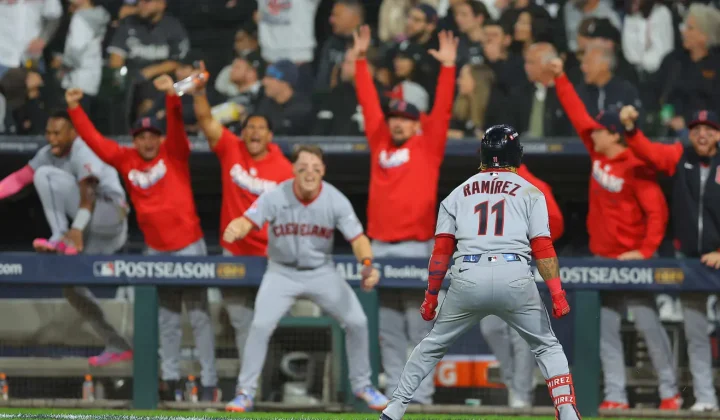
Guardians Force Winner-Take-All ALDS Game 5 With Six-Run Sixth Inning in Chicago
Cleveland scored six runs in the sixth inning to beat the White Sox 9-5 in Game 4 of the ALDS, setting up…
Read story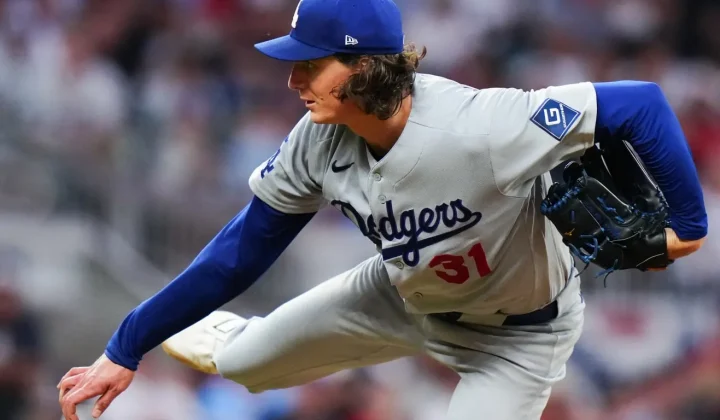
Dodgers Take Commanding 3-1 NLDS Lead Behind Glasnow’s Gritty Outing in Atlanta
Tyler Glasnow battled through command issues but limited Atlanta to one run over 4 2/3 innings as Los Angeles took a 3-1…
Read story
Braves Face Elimination as Dodgers Seek NLCS Berth in Game 4 NLDS Showdown
The Atlanta Braves host the Los Angeles Dodgers in a pivotal Game 4 of the National League Division Series on Wednesday night.…
Read storyRelated wiki

MLB Wild Card Rules Explained: Format, Tiebreakers & Postseason Impact
How the MLB wild card works in the current postseason format, including tiebreaker procedures, the 3-game series structure, and what it means…
Read storyPlayoff race
Reference page for playoff race language, qualification lines, tiebreakers and games-in-hand context.
Read story