NBA Standings Analysis: Evaluating the Western Conference Playoff Race and Tiebreaker Dynamics
An in-depth look at the Western Conference playoff race, examining tiebreaker rules, recent form, and key schedule stretches shaping the postseason picture.


The National Basketball Association regular season enters its most volatile phase as teams battle for positioning in the fiercely competitive Western Conference. With separation between seeds narrowing significantly from the top tier down to the play-in tournament line, general managers, coaching staffs, and analysts are closely tracking schedule difficulty and head-to-head tiebreakers. Understanding how these competitive margins shift requires looking past raw win-loss records to examine actual roster availability, recent defensive ratings, and the specific mechanics that govern postseason qualification.
Unlike past seasons where a clear tier of dominant franchises separated themselves by mid-winter, the current Western Conference table features compressed groupings where a three-game losing streak can drop a squad from home-court advantage into the single-elimination play-in zone. This article breaks down the structural mechanics of the current race, the role of tiebreaker criteria, and what the remaining fixture difficulty indicates for the final month of the campaign.
Why Tiebreakers Matter More Than Ever This Season
When multiple franchises finish the 82-game schedule with identical records, the league’s tiebreaker protocol dictates seeding rather than point differentials or coin flips. For division leaders and multi-team ties, head-to-head regular-season records serve as the primary filter. If teams split their season series, conference record becomes the deciding factor, followed by record against division opponents if applicable.
In a conference where five or six teams might finish within two games of each other, these micro-results carry enormous strategic weight. A single blown fourth-quarter lead in November against a conference rival can strip a team of home-court advantage in a potential first-round series. Front offices factor these potential tiebreakers into rotation management and load monitoring, knowing that an April seeding swap can alter a postseason path entirely.
What Official Standings and Injury Reports Reveal
Reviewing official league data from NBA.com and official team availability reports highlights why certain rosters are sustaining their momentum while others fade. Teams maintaining top-six positioning generally share two traits: defensive discipline inside the arc and resilience through minor injuries to key rotation pieces. Conversely, clubs sliding down the table often show spikes in defensive rating when primary rim protectors or perimeter stoppers miss consecutive contests.
Recent tracking from official league scoreboards and injury portals shows that depth is no longer a luxury but an absolute requirement. Squads relying heavily on a top-heavy seven-man rotation face mounting fatigue penalties as back-to-back sets accumulate.
Western Conference Contender Comparison
| Team Tier | Primary Strengths | Key Vulnerability | Seeding Focus |
|---|---|---|---|
| Top Tier (1-3) | Elite offensive rating, net margin | Bench scoring depth | Securing home-court advantage |
| Middle Tier (4-6) | Balanced rotation, strong home record | Road performance against elite defenses | Avoiding the play-in tournament |
| Play-In Zone (7-10) | Recent form surge, star scoring | Defensive consistency, tiebreakers | Climbing out of single-elimination |
Competing Readings of Second-Half Schedule Difficulty
Analysts looking at remaining fixture lists often arrive at differing conclusions about which contenders have the easiest path. Some metrics focus solely on opponent win percentages, while more granular evaluations factor in rest days, travel fatigue, and altitude challenges. For instance, a four-game road trip through western time zones against rested opponents carries a different physical toll than home stands against rebuilding squads.
Furthermore, teams fighting to avoid the play-in tournament approach late-season games with maximum urgency, sometimes resting veterans only when medical staff mandates it. Meanwhile, squads safely entrenched near the top might prioritize health over seeding, creating variance in nightly outcomes that traditional power rankings fail to capture.
What Could Change Next in the Seeding Race
The upcoming weeks will introduce several inflection points that could reshape the playoff bracket. Direct head-to-head matchups among conference rivals offer immediate four-point swing opportunities in the standings. Additionally, the final phase of the trade deadline buyout market often injects veteran reinforcement into benches that struggled with consistency during the winter months.
Observers should monitor injury report updates issued two hours prior to tip-off, as late scratches alter win probabilities significantly in tightly contested games. Tracking how coaching staffs adjust defensive coverages against elite pick-and-roll ball handlers will also signal which defenses are prepared for high-stakes playoff basketball.
What Remains Unclear and Key Caveats
Despite comprehensive tracking of advanced metrics and historical trends, several variables remain unpredictable. Unforeseen late-season injuries can instantly derail a contender’s ceiling, turning a championship hopeful into a first-round underdog. Furthermore, motivational variance—such as resting stars during the final week of the season—makes projection models prone to sudden error.
Readers evaluating the Western Conference landscape should treat projections as fluid estimates rather than fixed outcomes. Checking official league transaction pages, verified injury reports, and daily standings updates remains the most reliable method for assessing actual playoff trajectories as the regular season reaches its conclusion.
Related news
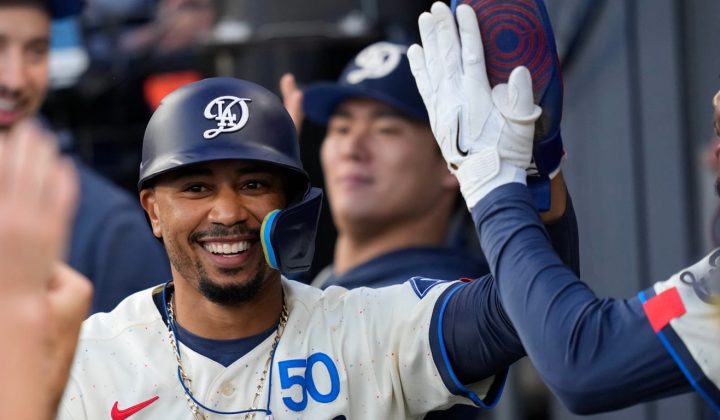
Mookie Betts Powers Dodgers Past Giants in Key Late-Season Win
Mookie Betts delivered a four-hit performance, including three doubles, as the Los Angeles Dodgers defeated the San Francisco Giants 10-4 on Saturday…
Read story
Pirates Eliminated From Playoff Contention Despite Offensive Surge in 2026
The Pittsburgh Pirates have been mathematically eliminated from the MLB postseason for the 11th consecutive year. Despite a vastly improved offense that…
Read story
Jamie Carragher’s High Praise Puts Daniel Munoz in Rare Premier League Company
The Nottingham Forest and Colombia defender received a remarkable endorsement from the Sky Sports pundit after his performance against Aston Villa, sparking…
Read story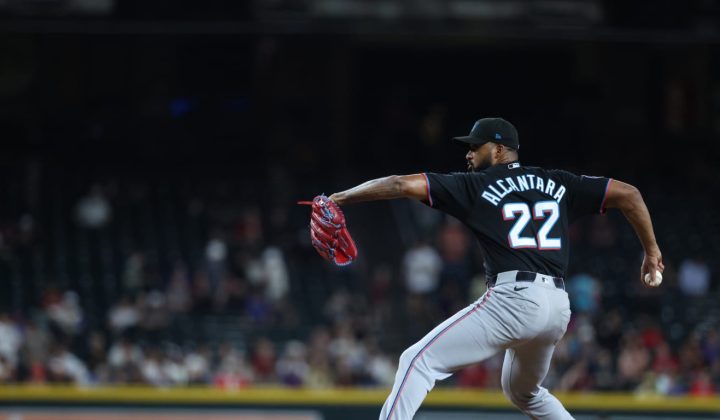
Sandy Alcantara Records First Career Save in Marlins Bullpen Appearance
Miami ace Sandy Alcantara earned his first career save Wednesday night, working a scoreless ninth inning in a 4-3 win over the…
Read storyRelated wiki

MLB Wild Card Rules Explained: Format, Tiebreakers & Postseason Impact
How the MLB wild card works in the current postseason format, including tiebreaker procedures, the 3-game series structure, and what it means…
Read storyPlayoff race
Reference page for playoff race language, qualification lines, tiebreakers and games-in-hand context.
Read story