What the moratorium really means: when NBA deals are agreed, reported, and finalized
NBA offseason language can be misleading if you treat every reported agreement as an official signing. This explainer separates reported deals, verbal agreements, and finalized transactions in clear, reader-first terms.

What the moratorium really means: when NBA deals are agreed, reported, and finalized
Summary box
– In NBA offseason coverage, a deal being reported is not automatically the same thing as a deal being officially finalized.
– Readers are usually trying to sort out status language: *interest*, *agreement*, and *official signing* do not mean the same thing.
– The safest practice is to treat team or league transaction channels as the strongest confirmation point.
– This article is written as an evergreen explainer and avoids year-specific timing claims unless they are verified from primary league materials.
What changed
The main point of confusion has not really changed: readers still see fast-moving offseason reports and naturally want to know whether a move is merely being discussed, verbally agreed, or formally completed. For an evergreen guide, the best way to handle that confusion is to focus less on hype and more on status language. In plain terms, a reported agreement should not be read with the same certainty as an official transaction announcement.
Because the verified source pack attached to this draft does not include NBA league documents, team transaction logs, or Collective Bargaining Agreement materials, this version stays deliberately high level. It explains the reading framework readers need, while leaving specific timing language, league-year references, and rule definitions for a sourced update before publication.
What the moratorium actually means for readers
For most readers, the practical meaning of a moratorium-style offseason window is simple: public discussion can move faster than formal completion. That means headlines and alerts may describe momentum, intent, or broad agreement before the paperwork and official confirmation stage readers usually care about most.
That distinction matters because sports news language often compresses several different stages into one fast headline. If a reader treats every report as final, they can end up misunderstanding where a transaction actually stands. A better habit is to separate three ideas: a team showing interest, a deal being reported as agreed, and a transaction being officially announced.
NBA deal status explained at a glance
| Stage | What it usually means | Typical wording readers may see | Should readers treat it as final? | What to check next |
|---|---|---|---|---|
| Reported interest | A player or team is being linked, but no completion is confirmed | “Interested in,” “monitoring,” “pursuing” | No | Wait for stronger reporting or an official statement |
| Reported agreement | Terms are described as agreed in public coverage | “Agreed to,” “expected to sign,” “intends to sign” | Not fully | Check whether there is official confirmation |
| Formal completion | The move has moved beyond reports into official channels | “Signed,” “announced,” “official” | Usually yes | Verify through team or league transaction pages |
Readers should notice the difference between language that signals movement and language that signals completion. Even in broad sports coverage outside the NBA, safer-reader guidance consistently emphasizes checking the status of a claim rather than assuming the most definitive interpretation.
The timeline from rumor to official transaction
A useful way to read offseason news is as a sequence rather than a single event. First comes interest or reporting. Next may come wording that suggests an agreement has been reached. Only after that should readers expect the strongest forms of confirmation, such as an official team announcement or a league-recognized transaction listing.
That does not mean every report is unreliable. It means the wording reflects different levels of certainty. In practical editorial terms, “agreed to” and “officially signed” should not be treated as interchangeable labels, especially in a market period when readers are reacting to rapid-fire updates.
Why some deals can feel more final than they are
The confusion is partly a language problem. Readers often encounter short alerts, social posts, and roundups that flatten nuance. Once a headline says a player is “going to” a team, many fans understandably process that as done, even if the strongest official confirmation has not yet appeared.
The safer reading approach is not skepticism for its own sake. It is precision. If the status is still being reported rather than formally announced, the most accurate interpretation is that the move appears headed in that direction, not that all remaining process steps have already been completed.
How to read NBA free-agency news without getting misled
- Check the exact wording. “Interested,” “agreed to,” and “signed” point to different stages.
- Look for the strongest confirmation source. Team announcements and league transaction records are stronger than recycled summaries.
- Be careful with alert-style headlines. Short posts often leave out the difference between a report and an official move.
- Treat details as provisional until formal confirmation appears. That includes structure, timing, and how a move is described.
- Separate confidence from certainty. A widely repeated report may still be different from a finalized transaction.
What readers should watch next
- An official team release
- A league or transaction-page update
- Follow-up reporting that changes the wording from expected or agreed to official
Old article audit
If an older version of this article treated the moratorium as a total freeze on all activity, it likely needs to be tightened. The clearer editorial approach is to explain that the real issue for readers is often the gap between what is being reported publicly and what has been formally confirmed.
Likewise, any previous copy that used “signed” when only a report of agreement existed should be revised. That kind of wording can overstate certainty and blur the line between news-cycle shorthand and official transaction status.
Sections to rewrite
The intro should be rewritten to answer the central confusion immediately: readers do not just want to know what the moratorium is called, they want to know whether a reported deal is actually done. That status distinction should appear in the first screen of the article.
The timeline section should also be rewritten around stages readers actually encounter in coverage: reported interest, reported agreement, and official confirmation. That structure is more useful than an abstract rules-first explanation when the goal is helping readers interpret offseason news correctly.
Any rules section that claims exact offseason dates, official start times, or formal NBA procedural details must be rewritten from primary league materials before publication. Those specifics are not supported by the current verified source pack and should not appear in public copy yet.
Sources
- GambleAware: safer gambling information (Source 1)
- UK Gambling Commission: safer gambling (Source 2)
- Responsible gambling overview (Source 3)
- What leaving the EU would really mean for British trade deals (Source 4)
- Greece votes No – now Syriza must clarify what that really means (Source 5)
Related news

Holy Cross football ends 16-year drought against Ansonia behind Nate Craft’s four touchdowns
The Crusaders overcame a third-quarter deficit to beat Ansonia 48-37, snapping a losing streak that dated back to 2009 and improving to…
Read story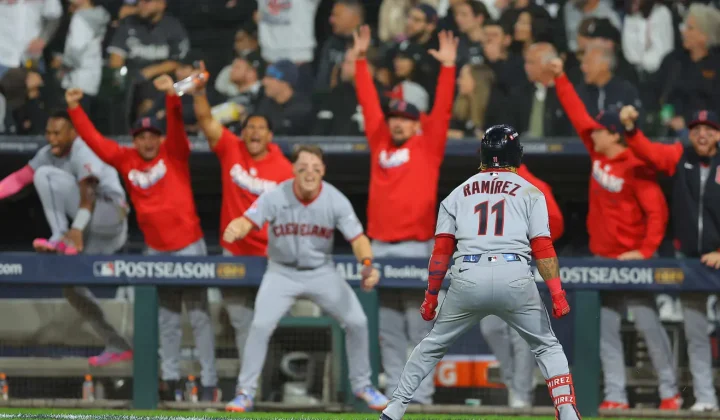
Guardians Force Winner-Take-All ALDS Game 5 With Six-Run Sixth Inning in Chicago
Cleveland scored six runs in the sixth inning to beat the White Sox 9-5 in Game 4 of the ALDS, setting up…
Read story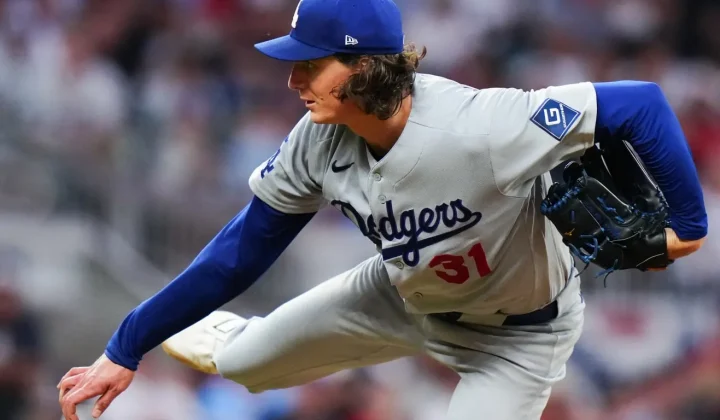
Dodgers Take Commanding 3-1 NLDS Lead Behind Glasnow’s Gritty Outing in Atlanta
Tyler Glasnow battled through command issues but limited Atlanta to one run over 4 2/3 innings as Los Angeles took a 3-1…
Read story
Braves Face Elimination as Dodgers Seek NLCS Berth in Game 4 NLDS Showdown
The Atlanta Braves host the Los Angeles Dodgers in a pivotal Game 4 of the National League Division Series on Wednesday night.…
Read storyRelated wiki

MLB Wild Card Rules Explained: Format, Tiebreakers & Postseason Impact
How the MLB wild card works in the current postseason format, including tiebreaker procedures, the 3-game series structure, and what it means…
Read storyPlayoff race
Reference page for playoff race language, qualification lines, tiebreakers and games-in-hand context.
Read story