How NBA Free Agency Impacts Team Rosters and Championship Odds
NBA free agency can reshape a roster’s depth, fit, and public expectations in a hurry. This evergreen guide explains how to separate real roster impact from hype and why title odds should be treated as a snapshot, not a verdict.

How NBA Free Agency Impacts Team Rosters and Championship Odds
Summary: NBA free agency matters because it can change far more than a team’s headline talent level. In practice, offseason moves affect rotation depth, lineup fit, flexibility, and public expectation, while any discussion of championship odds should be handled carefully and treated as a time-sensitive market signal rather than proof of team strength.
What happened
NBA free agency is one of the league’s most important offseason mechanisms because it is where teams try to add talent, replace departures, and reshape their roster balance before the next season. For readers, the key idea is simple: a move can look huge in headlines but matter most in smaller basketball details such as shooting, defense, ballhandling depth, or lineup versatility.
Just as important, there is a difference between a reported move, a formal agreement, and a fully completed transaction. That distinction matters whenever readers are trying to judge whether a team has actually solved a problem or is still waiting for paperwork, follow-up moves, or additional roster decisions.
Why it matters
Free agency affects team quality in layers. A star addition may raise a team’s ceiling, but a quieter signing can matter just as much if it fills a real weakness, such as point-of-attack defense, second-unit creation, frontcourt depth, or reliable shooting around primary scorers. In that sense, roster construction is not only about collecting the biggest names; it is about building combinations that work over a long season and in playoff matchups.
Championship odds often move when public expectations move, but expectations are not certainty. A market number can reflect enthusiasm, uncertainty, and sentiment all at once, which is why readers should treat odds as one signal among many rather than a final answer about who will win the title.
Continuity matters too. Teams that keep a core together may benefit from role clarity and chemistry, while teams that overhaul large parts of the rotation may gain upside but also add volatility. That tradeoff is one reason offseason “winners” do not always become the best teams once games begin.
What is confirmed
What readers can confirm most reliably in any free-agency cycle is the broad process: teams make offseason moves that affect roster shape, and public reaction can influence how those teams are discussed and priced in wider sports conversation. It is also reasonable to separate confirmed transaction status from interpretation, because the factual question is whether a move is official, while the analytical question is whether that move will improve the team where it matters most.
For betting-adjacent context, the safest confirmed principle is that any market-style outlook should be approached responsibly and without certainty language. Safer-gambling and public-interest guidance consistently emphasizes caution, limits, and the need to avoid treating betting outcomes as guaranteed, which aligns with a careful reading of offseason championship odds.
What may change
Almost everything that makes free agency interesting also makes it unstable. A team can sign one player and still remain vulnerable at another position. A reported agreement can still need final completion. A roster that looks complete in July can still change through later trades, waivers, camp battles, injuries, or internal development.
That is why the championship picture should remain flexible. Early odds or loud reactions may shift again once a roster settles, preseason roles become clearer, or a team’s actual strengths and weaknesses show up on the floor.
Free-agency impact tracker
| Area to evaluate | What to check | Why it matters for roster quality | Why it matters for championship odds |
|---|---|---|---|
| Top-end talent | Did the team add or lose a major creator or defender? | Changes ceiling and playoff shot-making | Big-name moves can quickly change public expectation |
| Rotation depth | Did the bench improve at guard, wing, or center? | Helps cover injuries and stabilize the regular season | Deeper teams may be viewed as less fragile over time |
| Lineup fit | Do new players complement the existing stars? | Better spacing, defense, and role clarity can matter more than raw name value | Markets may react before true chemistry is known |
| Flexibility | Did the team preserve room for later moves? | Future trades or additions can still reshape the roster | Odds can change again if another move follows |
| Certainty of move | Is the transaction official or still being reported? | Prevents overrating a roster that is not finalized | Avoids reacting too strongly to incomplete information |
What readers should do
- Check whether a move is official before judging the roster. Reported moves and completed moves are not the same thing, and that difference matters when evaluating depth charts and role changes.
- Focus on fit, not only star power. Ask whether a signing improves shooting, defense, size, rebounding, bench stability, or secondary creation.
- Treat championship odds as a snapshot. They can reflect excitement and uncertainty at the same time, so they should support analysis rather than replace it.
- Revisit the outlook after more information arrives. Training camp roles, health updates, and later transactions often tell you more than the first wave of offseason headlines.
Sources
Related news
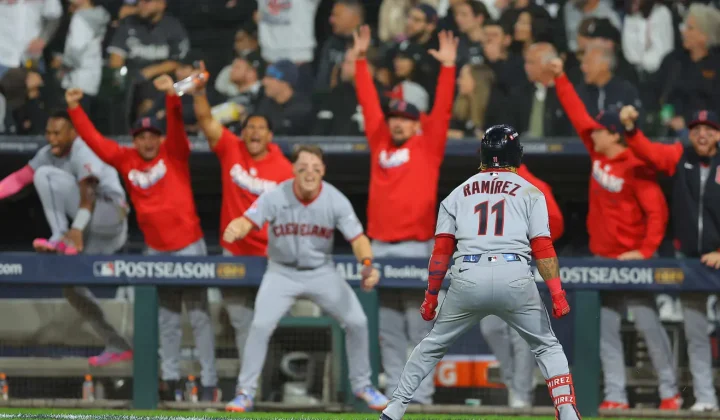
Guardians Force Winner-Take-All ALDS Game 5 With Six-Run Sixth Inning in Chicago
Cleveland scored six runs in the sixth inning to beat the White Sox 9-5 in Game 4 of the ALDS, setting up…
Read story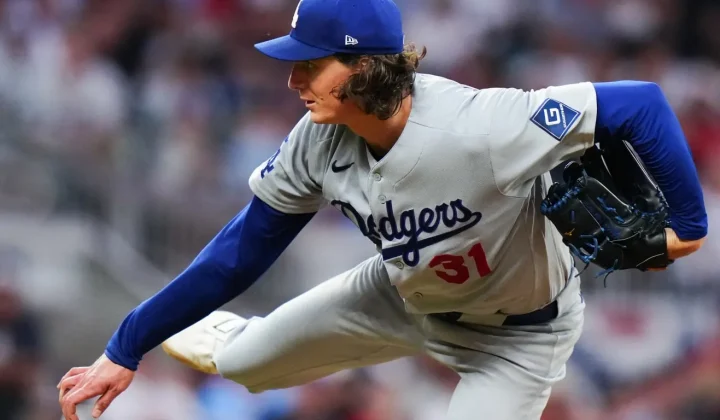
Dodgers Take Commanding 3-1 NLDS Lead Behind Glasnow’s Gritty Outing in Atlanta
Tyler Glasnow battled through command issues but limited Atlanta to one run over 4 2/3 innings as Los Angeles took a 3-1…
Read story
Braves Face Elimination as Dodgers Seek NLCS Berth in Game 4 NLDS Showdown
The Atlanta Braves host the Los Angeles Dodgers in a pivotal Game 4 of the National League Division Series on Wednesday night.…
Read story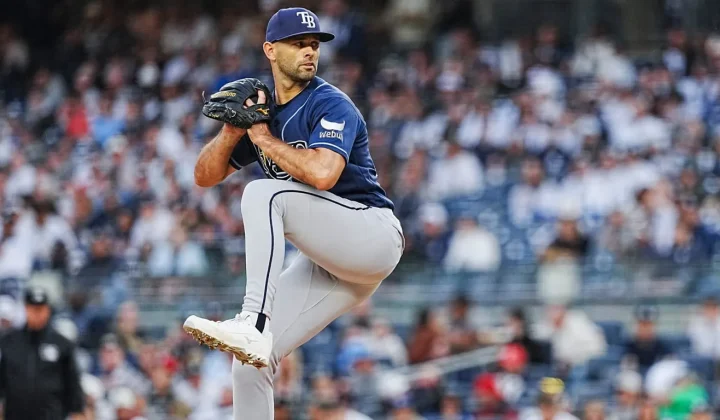
Nick Martinez Returns to Yankee Stadium as Rays Seek ALDS Sweep in Game 3
Tampa Bay right-hander Nick Martinez, who once got ejected from Yankee Stadium as a college fan, starts ALDS Game 3 against New…
Read storyRelated wiki

MLB Wild Card Rules Explained: Format, Tiebreakers & Postseason Impact
How the MLB wild card works in the current postseason format, including tiebreaker procedures, the 3-game series structure, and what it means…
Read storyPlayoff race
Reference page for playoff race language, qualification lines, tiebreakers and games-in-hand context.
Read story