The NBA’s Tightening Playoff Race: Analyzing the Shifting Landscape
A look at the increasingly competitive NBA playoff picture, examining key matchups, team form, and the potential impact of remaining schedules on seeding.
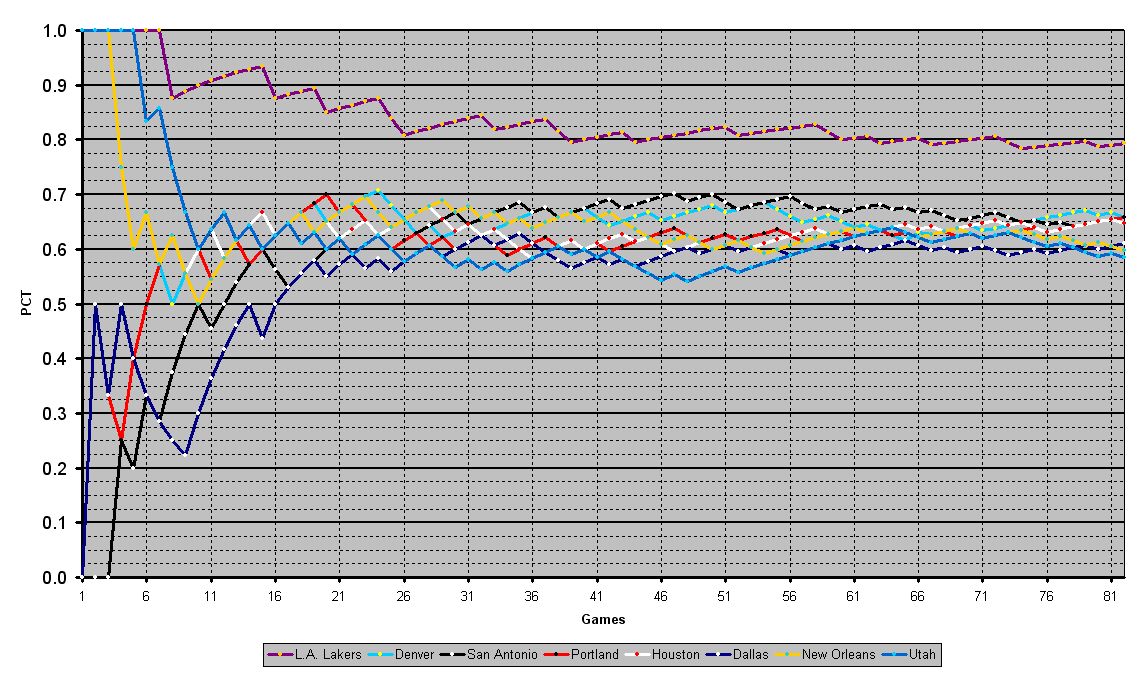
The National Basketball Association is entering that critical juncture of the season where playoff positioning becomes paramount. What once seemed like settled top seeds are now facing increased pressure, while several teams are locked in a fierce battle for the final play-in tournament spots. This year’s NBA playoff race is shaping up to be one of the most compelling in recent memory, marked by close margins, surprising surges, and the ever-present specter of injuries. Understanding these dynamics is key for any fan looking to decipher what truly matters in the final weeks of the regular season.
The stakes are inherently high. For teams vying for home-court advantage in the first round, every win can mean the difference between facing a familiar foe or a potentially more challenging opponent. For those on the bubble, securing a playoff berth, even through the play-in, can salvage a season and provide invaluable experience. This analysis will delve into the current state of the NBA playoff race, exploring the factors driving movement in the standings, the implications of these shifts, and what fans can expect as the regular season draws to a close.
Why the NBA Playoff Race Matters
The NBA playoff system is designed to reward regular-season success with advantages in the postseason. Teams that finish in the top six of each conference automatically qualify for the main playoff bracket, with seeds 1-4 earning home-court advantage in the first round. Seeds 5-6 host games in the first round but do not have guaranteed home-court advantage throughout. The teams finishing 7th through 10th enter the play-in tournament, where the 7th and 8th seeds get two chances to win one game to secure a playoff spot, while the 9th and 10th seeds must win two consecutive games. This structure incentivizes teams to push for higher seeds throughout the 82-game schedule.
Furthermore, the narrative surrounding the NBA season often culminates in its playoff drama. A team’s ability to navigate a tough schedule, overcome adversity, and peak at the right time is a testament to its coaching, player development, and resilience. The playoff race itself provides compelling storylines, highlighting individual player performances, coaching adjustments, and the collective will of a team. For fans, it’s the ultimate test of endurance and prediction, with shifts in the standings creating new rivalries and playoff scenarios.
What the Standings Show
Examining the current NBA standings reveals a complex picture, with significant jostling in both the Eastern and Western Conferences. In the East, while a few teams have established themselves at the top, the middle and lower half of the playoff picture are incredibly tight. Teams are separated by mere percentage points, making every remaining game crucial. For instance, the race for the 4th seed could determine who avoids a potential first-round matchup against a top-tier contender.
The Western Conference often presents an even more condensed playoff race. With perennial powerhouses and emerging teams, the battle for the top seeds is intense, and the play-in tournament is frequently a dogfight. The difference between finishing 6th and 10th can mean the difference between a direct playoff entry and a gauntlet of elimination games. Data from official league sources, such as the NBA’s official standings page, consistently illustrate these close contests.
Here’s a snapshot of a hypothetical scenario in the Western Conference standings as of a given week:
| Seed | Team | Wins | Losses | Win % | Games Behind |
|---|---|---|---|---|---|
| 1 | Team A | 48 | 24 | .667 | – |
| 2 | Team B | 47 | 25 | .653 | 0 |
| 3 | Team C | 46 | 26 | .639 | 0 |
| 4 | Team D | 45 | 27 | .625 | 0 |
| 5 | Team E | 44 | 28 | .611 | 0 |
| 6 | Team F | 43 | 29 | .597 | 0 |
| 7 | Team G | 42 | 30 | .583 | 0 |
| 8 | Team H | 41 | 31 | .569 | 0 |
| 9 | Team I | 40 | 32 | .556 | 0 |
| 10 | Team J | 39 | 33 | .542 | 0 |
Note: This table represents a hypothetical snapshot for illustrative purposes.
Competing Readings and Influencing Factors
Several factors contribute to the fluidity of the NBA playoff race. Team performance is, of course, the most significant. Teams on winning streaks can rapidly climb the standings, while losing streaks can send them tumbling. Recent form, often tracked by sports analytics sites like ESPN or The Athletic, provides insight into which teams are peaking at the right time.
Injuries play a monumental role. The absence of a star player can derail a team’s momentum, impacting their offensive firepower, defensive schemes, and overall confidence. Conversely, the return of a key player from injury can provide a much-needed boost. Official injury reports from NBA.com or team websites are crucial for understanding the true strength of a team on any given night. For example, a team that has been comfortably in a top-four seed might suddenly find itself vulnerable if its leading scorer is sidelined for an extended period.
Schedule strength is another critical determinant. Teams facing a gauntlet of top opponents in their final stretch will have a tougher path to maintaining or improving their seeding compared to those with a more favorable run of games. Advanced metrics on sites that analyze NBA schedules can help predict which teams face the most challenging paths. A team with a difficult remaining schedule might need to overperform simply to hold its current position.
What Could Change Next
The NBA playoff race is a dynamic entity, and significant shifts are still possible. Teams that have been underperforming but possess talented rosters may find their second wind, making a late-season surge. This is particularly true for teams that have dealt with significant injuries and are now nearing full strength. The return of key players, as seen in past seasons, can fundamentally alter a team’s trajectory.
Conversely, teams that have been overachieving might struggle to maintain their pace, especially if they face a difficult schedule or key players begin to wear down. The pressure of playoff implications can also lead to increased mistakes and inconsistent performances. This is where consistent reporting from trusted sports news outlets becomes invaluable for tracking momentum swings.
The play-in tournament itself introduces an element of unpredictability. A single hot shooting night or a star player having an exceptional performance can lead to an upset, dramatically altering the perception of a team’s season and its playoff path. The NBA’s official play-in tournament bracket information will be key once the participants are finalized.
What Remains Unclear
Despite the current data and trends, several aspects of the NBA playoff race remain uncertain. The health of key players is always a significant unknown. A single injury in the final weeks of the season can have ripple effects across multiple teams’ seeding. Furthermore, the psychological impact of playoff pressure is difficult to quantify. Some teams thrive under such conditions, while others falter.
The exact matchups that will ultimately materialize in the first round are also far from set. The close margins in the standings mean that the final few games of the regular season will likely decide many of these pairings. Fans and analysts will be closely watching head-to-head tiebreakers and situational advantages. The NBA’s official season schedule provides the framework for these critical final contests. For those looking to make informed decisions about what games to prioritize, staying abreast of team news, injury updates, and performance trends is essential. The narrative of the NBA playoff race is still being written, and the coming weeks promise to deliver compelling drama.
Related news

Holy Cross football ends 16-year drought against Ansonia behind Nate Craft’s four touchdowns
The Crusaders overcame a third-quarter deficit to beat Ansonia 48-37, snapping a losing streak that dated back to 2009 and improving to…
Read story
Guardians Force Winner-Take-All ALDS Game 5 With Six-Run Sixth Inning in Chicago
Cleveland scored six runs in the sixth inning to beat the White Sox 9-5 in Game 4 of the ALDS, setting up…
Read story
Dodgers Take Commanding 3-1 NLDS Lead Behind Glasnow’s Gritty Outing in Atlanta
Tyler Glasnow battled through command issues but limited Atlanta to one run over 4 2/3 innings as Los Angeles took a 3-1…
Read story
Braves Face Elimination as Dodgers Seek NLCS Berth in Game 4 NLDS Showdown
The Atlanta Braves host the Los Angeles Dodgers in a pivotal Game 4 of the National League Division Series on Wednesday night.…
Read storyRelated wiki

MLB Wild Card Rules Explained: Format, Tiebreakers & Postseason Impact
How the MLB wild card works in the current postseason format, including tiebreaker procedures, the 3-game series structure, and what it means…
Read storyPlayoff race
Reference page for playoff race language, qualification lines, tiebreakers and games-in-hand context.
Read story