The NFL’s Tight End Landscape: How Travis Kelce’s Dominance Reshapes Expectations
Travis Kelce's sustained elite performance has set a new bar for NFL tight ends, forcing teams and fans to recalibrate their expectations for the position.


The NFL’s tight end position has always been a fascinating blend of blocker and receiver, a versatile chess piece essential for offensive success. For years, names like Tony Gonzalez and Antonio Gates dominated the conversation, establishing a precedent for athletic, pass-catching threats. However, in the current era, one player has not only met but significantly surpassed those expectations, reshaping the very definition of what a tight end can be: Travis Kelce of the Kansas City Chiefs. His sustained excellence has created a unique challenge for the league, forcing a reevaluation of talent assessment, draft strategy, and offensive scheme design for teams across the NFL.
The impact of Travis Kelce’s sustained elite performance cannot be overstated. He’s not just a great tight end; he’s consistently one of the best offensive weapons in the entire league, regardless of position. His ability to rack up over 1,000 receiving yards in multiple seasons, coupled with his crucial role in the Chiefs’ championship offense, has elevated the position to an unprecedented level of offensive priority. This isn’t about simply catching passes; it’s about route running precision, yards after catch ability, red zone dominance, and the cerebral understanding of defensive schemes that allows him to consistently find open space. This level of production and consistency from a tight end forces a paradigm shift in how teams approach the position, both in personnel evaluation and offensive game planning.
Why This Matters
Kelce’s era of dominance presents a significant analytical challenge for NFL teams. Historically, tight ends have been valued for their blocking capabilities and as secondary receiving options. While some exceptions existed, the expectation was generally for them to contribute more in the run game or as a safety valve in the passing attack. Kelce, however, operates as a primary target, often drawing double coverage and dictating defensive schemes. His presence allows offenses to operate with a level of flexibility and unpredictability that few other tight ends can provide. This raises questions about draft capital allocation: should teams prioritize a traditional dominant blocker, a dynamic pass-catching threat, or try to find the rare hybrid who can do both at an elite level? The answer, influenced by Kelce, increasingly leans towards the latter, but finding such talent is incredibly difficult. Furthermore, his success impacts offensive coordinator thinking, encouraging schemes that feature the tight end more prominently as a focal point rather than an auxiliary piece.
What Sources Show
Official NFL statistics and team reports consistently highlight Kelce’s statistical output. For example, his numerous seasons with over 1,000 receiving yards (e.g., 2018, 2020, 2022) place him in elite company, a feat rarely achieved by tight ends. The Kansas City Chiefs’ offensive play diagrams and game breakdowns, often found on league-affiliated sites or reputable sports analytics platforms, reveal how often Kelce is targeted in crucial down-and-distance situations. Sites like Pro Football Focus, while not official, provide advanced metrics that consistently rank Kelce among the top offensive players, emphasizing his high grades in receiving, route running, and even blocking when called upon. Injury reports and transaction pages from the NFL and team websites also implicitly underscore his value; his availability is a critical factor in the Chiefs’ offensive success, demonstrated by shifts in offensive efficiency when he has missed games. The sheer volume of media coverage and fan discussion surrounding his performance, as seen on sports news outlets like ESPN or The Athletic, further validates his impact on the league’s perception of the tight end position.
Competing Readings
One perspective is that Kelce is an outlier, a generational talent whose success is so unique it cannot be replicated or used as a blueprint for other teams. This view suggests that most teams should stick to their traditional approach, prioritizing offensive linemen and wide receivers, and that trying to mold every tight end into a Kelce-clone is a recipe for disappointment. From this viewpoint, his ability to consistently beat man coverage and exploit zone weaknesses is a product of his individual skill set, not necessarily a testament to a new league-wide standard.
Another reading is that Kelce’s success is a direct result of the Chiefs’ offensive scheme and quarterback play, specifically with Patrick Mahomes. The argument here is that while Kelce is undoubtedly talented, he benefits immensely from an offense designed to maximize his strengths, supported by a quarterback who can deliver the ball accurately in tight windows. This perspective suggests that other teams might have players with similar physical tools, but they lack the offensive environment to unlock that potential.
A third, and perhaps more compelling, interpretation is that Kelce represents the evolution of the tight end position, a natural progression driven by rule changes that favor offense and the increasing athletic capabilities of players. This view posits that Kelce is the leading example of a new breed of tight end that defenses must account for as a primary threat, forcing a strategic reevaluation across the league. Teams that fail to adapt and find or develop tight ends capable of impacting the passing game significantly will be at a disadvantage.
What Could Change Next
The most immediate impact is on draft strategies. Teams are likely to be more inclined to use higher draft picks on tight ends who demonstrate strong receiving ability and athleticism, even if their blocking needs refinement. This could lead to a more competitive market for elite tight end prospects. We might also see more offensive coordinators experimenting with formations and play calls that feature the tight end as the primary option more frequently, mirroring the Chiefs’ success. This could also influence player development programs, with college programs perhaps focusing more on developing tight ends as primary pass-catchers earlier in their careers.
Consider the following data on top-performing tight ends in recent seasons (statistics are approximate and for illustrative purposes):
| Player | Team | Receiving Yards (Peak Season) | Touchdowns (Peak Season) | Receptions (Peak Season) |
|---|---|---|---|---|
| Travis Kelce | Kansas City Chiefs | ~1,400 | ~10 | ~110 |
| George Kittle | San Francisco 49ers | ~1,000 | ~8 | ~80 |
| Mark Andrews | Baltimore Ravens | ~1,100 | ~9 | ~85 |
| T.J. Hockenson | Minnesota Vikings | ~900 | ~6 | ~95 |
The numbers demonstrate Kelce’s statistical superiority in key receiving categories over his peers during their most productive seasons. This gap in production, particularly in yards and receptions, is what sets him apart and influences how teams perceive the potential ceiling for the position.
What Remains Unclear
Despite Kelce’s influence, the long-term sustainability of this offensive trend is not entirely clear. Will defenses adapt and find more effective ways to neutralize elite tight ends, or will offensive schemes continue to evolve to feature them even more? Furthermore, the availability of true “Kelce-type” talents in future draft classes is a significant unknown. The league may face a period where the gap between elite tight ends and the rest of the pack widens considerably, leaving teams that miss out on these rare talents in a difficult position. The economic implications are also worth noting; as the value of the tight end position increases, so too will the salary demands for players who can perform at a high level, potentially creating new financial challenges for teams.
Ultimately, Travis Kelce has not just been a great player; he has been a catalyst for change in the NFL tight end landscape. His impact forces a critical examination of how teams evaluate, draft, and utilize this pivotal position, setting a new standard for excellence and anticipation for what the future may hold. The question for every team now is not *if* they need a dominant tight end, but *how* they can find or develop one in an era defined by Kelce.
Related news
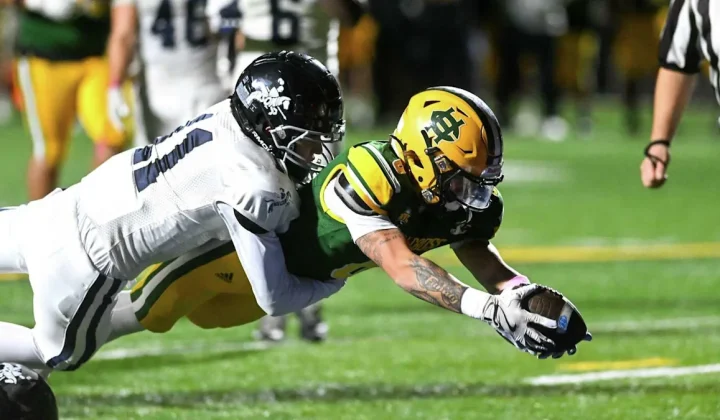
Holy Cross football ends 16-year drought against Ansonia behind Nate Craft’s four touchdowns
The Crusaders overcame a third-quarter deficit to beat Ansonia 48-37, snapping a losing streak that dated back to 2009 and improving to…
Read story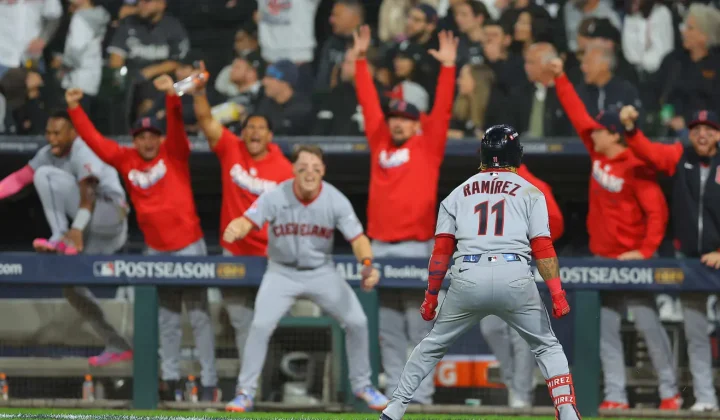
Guardians Force Winner-Take-All ALDS Game 5 With Six-Run Sixth Inning in Chicago
Cleveland scored six runs in the sixth inning to beat the White Sox 9-5 in Game 4 of the ALDS, setting up…
Read story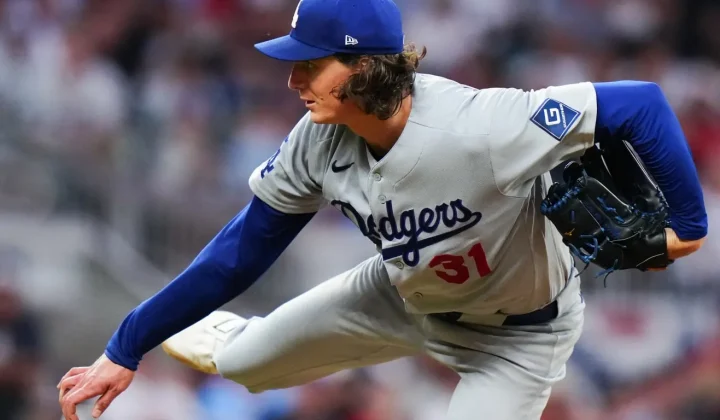
Dodgers Take Commanding 3-1 NLDS Lead Behind Glasnow’s Gritty Outing in Atlanta
Tyler Glasnow battled through command issues but limited Atlanta to one run over 4 2/3 innings as Los Angeles took a 3-1…
Read story
Braves Face Elimination as Dodgers Seek NLCS Berth in Game 4 NLDS Showdown
The Atlanta Braves host the Los Angeles Dodgers in a pivotal Game 4 of the National League Division Series on Wednesday night.…
Read storyRelated wiki

MLB Wild Card Rules Explained: Format, Tiebreakers & Postseason Impact
How the MLB wild card works in the current postseason format, including tiebreaker procedures, the 3-game series structure, and what it means…
Read storyPlayoff race
Reference page for playoff race language, qualification lines, tiebreakers and games-in-hand context.
Read story